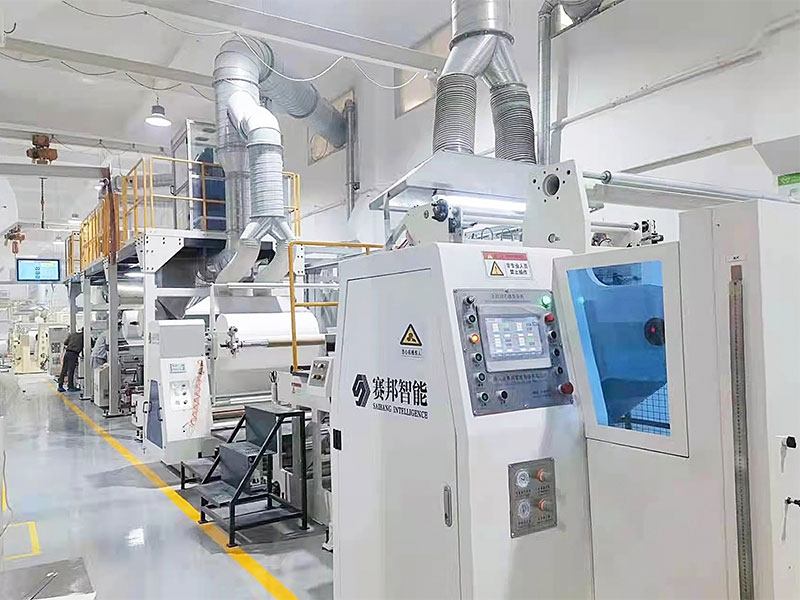


How Can Upgrading to an Automated Diapermaking Machine for Sale Reduce Your Reliance on Hard-to-Find Skilled Operators?
For manufacturing directors in the hygiene products sector, managing the workshop floor has evolved from a technical challenge into a severe labor crisis. The traditional manufacturing paradigm for disposable hygiene goods relied heavily on the tribal knowledge of veteran machine operators. These specialized technicians possessed a subjective "feel" for the assembly line, manually adjusting mechanical clutches, tweaking web tension rollers, and calibrating adhesive spray timings based on years of trial and error. However, as the global manufacturing workforce ages, finding and retaining operators with this level of specific mechanical intuition has become nearly impossible.
When a factory relies on a few critical individuals to maintain product quality, the entire business operation becomes highly vulnerable. If an experienced operator resigns, retires, or takes medical leave, the plant immediately suffers from spiked scrap rates, unscheduled downtime, and inconsistent product tracking. Compounding this issue are the skyrocketing payroll expectations of the remaining talent pool, which heavily erode factory profit margins. Shifting a facility away from manual mechanical linkages toward total digital automation is no longer just a strategy for increasing line speed—it is a critical risk-management necessity to insulate your production output from the volatile industrial labor market.
The Financial Drain of Experience-Dependent Production
Operating an aging or semi-automated production line creates an ongoing financial vulnerability regarding training overhead. When a manufacturing setup requires manual coordination of raw materials like nonwovens, elastic ribbons, and fluff pulp, onboarding a new employee takes months of supervised field training. During this extended training window, the machine inevitably suffers from operator errors, leading to massive batches of defective products that cannot clear quality control.
Furthermore, manual adjustments lack centralized precision. If an operator over-tightens a tension brake on a backsheet film feed, the thin plastic stretches or tears, forcing a complete line stoppage to re-thread the web. In high-capacity environments, these frequent micro-stoppages ruin the facility's Overall Equipment Effectiveness (OEE). The modern market demands a technological alternative where the operational parameters are governed by digital processors rather than human guesswork, allowing factory owners to look for a modern diapermaking machine for sale that completely standardizes the production environment.
Transitioning Tribal Knowledge into Digital Recipes
The core engineering solution to the operator deficit is the implementation of multi-axis full-servo drive architecture. By replacing old-fashioned chains, belts, and manual gearboxes with independent servo motors synchronized by a centralized programmable logic controller (PLC), the machine internalizes the expertise previously held only by master technicians. Every critical parameter—including cutting lengths, phase registration, and tension ratios—is saved digitally within the system's database as a specific product recipe.
When searching for an advanced diapermaking machine for sale, procurement teams must prioritize this digital recipe functionality to safeguard their shop floor. With an automated interface, transitioning the line from an infant diaper layout to a larger size no longer requires hours of manual calibration with wrenches and calipers. Instead, a standard warehouse worker can simply select the desired preset on a touchscreen panel. The servo motors automatically adjust their positions and speed ratios within seconds, maintaining a flawless cutting alignment and uniform tension without requiring a highly paid mechanical specialist to oversee the changeover.
Securing Core Material Precision Without Human Intervention
The most sensitive zone in hygiene manufacturing is the formation and placement of the absorbent core. Managing the delicate distribution of superabsorbent polymers (SAP) alongside wood pulp or synthetic nonwoven carriers requires continuous adjustment to prevent localized clumping or thin spots that cause product failure in the retail market.
Our machinery production facility resolves this material complexity by integrating total automation into the raw composite stage. For facilities aiming to eliminate manual blending errors entirely, our
Conclusion
Maintaining a profitable hygiene manufacturing facility requires breaking the dependency on hard-to-source technical labor. Relying on the manual expertise of a fluctuating workforce leaves your production volume, material waste ratios, and contract timelines completely unprotected. Upgrading your floor to a fully digitized, servo-driven production matrix transfers the operational intelligence from human staff directly into the machine's programming, allowing you to sustain maximum output and absolute batch consistency using standard, readily available operators.
If your company is struggling with rising operational labor costs, or if you are drafting a technical blueprint for a new automated production facility, our engineering consultants are available to evaluate your layout. Send us your target production speeds, product layer configurations, and current local labor constraints. We will assess your factory bottlenecks and compile a comprehensive factory-direct technical proposal to help you stabilize your labor dependency and secure your manufacturing margins. Get in touch with our corporate desk today to initiate an automation assessment for your project.