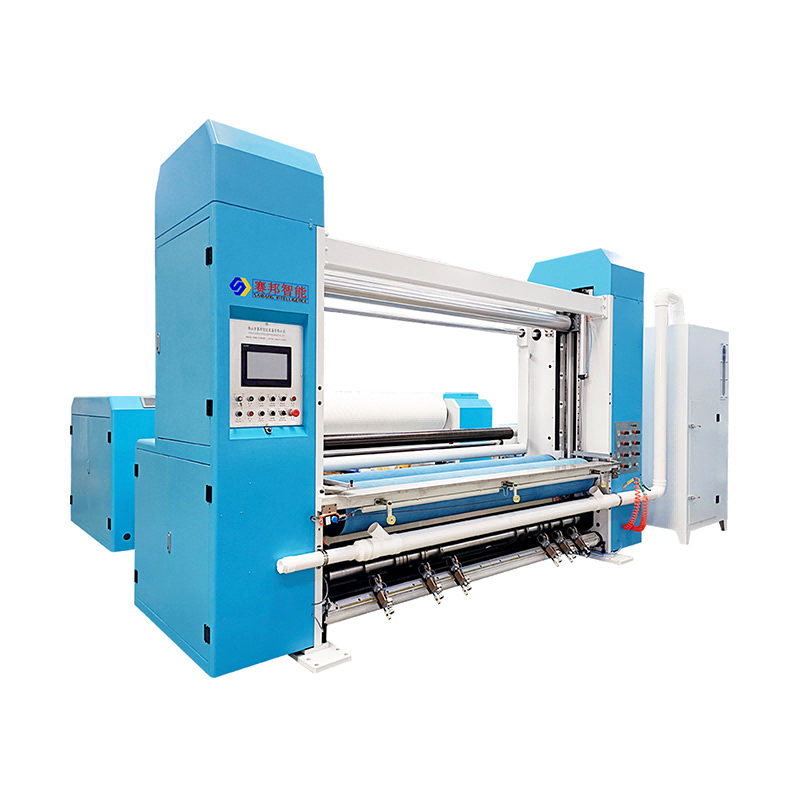


Why Do Hygiene Product Manufacturers Lose Output Efficiency After Installing Customized Non Woven Roll Slitting Machine?
For hygiene product manufacturers, a Slitting Machine is not only an auxiliary device. It directly affects the supply rhythm of diaper materials, sanitary pad materials, medical nonwoven rolls, and other converted raw materials used in continuous production. When the machine cannot keep stable output after installation, the problem quickly spreads to the whole production plan.
Many factories invest in a customized non woven roll slitting machine to match their material width, roll diameter, rewinding requirement, and downstream production speed. However, if the machine is not configured according to real production conditions, manufacturers may face frequent adjustment, unstable tension, uneven roll edges, material waste, and lower actual output than expected.
Output Loss Often Starts From Material Handling
Nonwoven Rolls Behave Differently During Slitting
Nonwoven materials used in hygiene products can vary in thickness, softness, elasticity, surface friction, and roll tension. Baby diaper topsheet material, backsheet material, side tape material, medical nonwoven fabric, and sanitary pad surface layers may not respond the same way during slitting.
If the machine only performs well under a single test material but cannot adapt to actual production rolls, operators may need to slow down speed, adjust tension repeatedly, or stop the line for correction. This directly reduces daily output.
Roll Feeding Stability Affects The Whole Line
Unstable feeding often creates hidden efficiency loss. The machine may still run, but the operator may not be able to maintain the target speed for a full shift.
When feeding tension fluctuates, slit edges may become uneven, rewound rolls may be loose or too tight, and downstream machines may reject the material. In hygiene product manufacturing, this affects not only the slitting process but also diaper or sanitary pad production that depends on stable roll quality.
Customization Must Match Real Factory Conditions
Width And Rewinding Requirements Should Be Confirmed Early
A customized non woven roll slitting machine should be configured according to the buyer’s real material width, finished roll width, roll diameter, core size, and expected output speed.
If these details are not confirmed clearly before production, the machine may require repeated modification after delivery. For factories expanding new hygiene product lines, this can delay trial production and affect order planning.
Automation Level Changes Labor Efficiency
Some buyers focus mainly on machine price and overlook automation. In actual operation, manual adjustment, roll loading, edge correction, and rewinding control all affect production efficiency.
A more suitable automation configuration can reduce operator workload, improve roll consistency, and help the factory maintain more stable output across multiple shifts.
Frequent Adjustment Creates Hidden Production Cost
Operators Spend Time Solving Repeated Problems
When the machine requires frequent manual correction, the actual cost is not limited to downtime. Operators spend time checking tension, blade position, roll alignment, and rewinding condition.
This repeated work reduces labor efficiency and may create dependence on experienced operators. If only one or two workers know how to keep the machine running smoothly, the factory becomes more vulnerable during shift changes or staff turnover.
Material Waste Reduces Profit Per Order
Nonwoven raw materials are a major cost in hygiene product manufacturing. When slit edges are unstable or roll rewinding is poor, factories may need to trim more waste, reject defective rolls, or reprocess material.
For manufacturers working with large orders, even small waste rates can reduce profit significantly. A stable non woven roll slitting machine helps protect material utilization and makes production cost easier to control.
Why Factory Support Matters After Installation
Installation And Debugging Affect Final Output
A machine that looks well-built at the factory still needs proper installation, testing, and adjustment at the buyer’s site. Material conditions, electricity, workshop layout, operator habits, and downstream equipment all influence final performance.
Our team provides solutions, technical services, installation, and debugging support to help buyers reduce the gap between planned capacity and real production output.
Technical Communication Should Continue After Delivery
For hygiene product manufacturers, the first few weeks after installation are critical. Operators need to understand machine settings, maintenance points, common adjustment methods, and material change procedures.
A supplier that only ships the machine without practical technical support may leave the buyer struggling to reach stable output. Continuous communication helps factories solve problems faster and shorten the production learning curve.
Factory Strength Behind Stable Equipment Supply
R&D Experience Supports Better Machine Matching
Our founding team has 15 years of experience in new materials and medical and hygiene equipment. This background helps us understand not only machine structure, but also how flexible materials behave during converting, slitting, laminating, embossing, and rewinding.
This is important for buyers who process nonwoven rolls for diapers, sanitary pads, medical hygiene products, and other flexible material applications.
Manufacturing And Certification Support Long-Term Orders
Our factory is a national high-tech enterprise located in Foshan, within the Greater Bay Area manufacturing belt. We hold CE certification and more than 30 technical patents, and our equipment is supplied to customers in China, Southeast Asia, Europe, South America, and other markets.
The product range includes slitting machines, Laminating Machines, Embossing Machines, Diaper Making Machines, sanitary pad making machines, casting machines, and rewinding machines. This broader equipment experience allows our team to support hygiene product manufacturers with more complete production line thinking.
Before The Next Production Bottleneck Appears
A customized non woven roll slitting machine should help hygiene product manufacturers improve material preparation, not become a new bottleneck after installation. Buyers should review material type, finished roll size, rewinding requirement, automation level, operator workload, and after-sales support before confirming the order.
Our team can help evaluate your nonwoven material, target speed, finished roll specifications, factory layout, and production expansion plan. For bulk equipment orders, customized configuration, technical discussion, or project quotation, you can send your requirements and expected production capacity to our team.
To review more equipment information or request a quotation, visit https://www.sayatechglobal.com.