


What Are The Hidden Maintenance Costs Of Low-Budget Slitter Rewinders?
In the competitive world of flexible packaging and film conversion, the temptation to prioritize a lower initial capital expenditure is understandable. When browsing through various quotes, the Automatic film slitting machine price often becomes the primary filter for procurement managers. However, focusing solely on the sticker price can be a deceptive strategy. What appears to be a bargain in the boardroom often transforms into a logistical nightmare in the workshop, where frequent motor failures and sensor inaccuracies erode profit margins faster than any initial saving could justify.
The True Cost Of Frequent Drive System Failures
The heart of any high-performance slitter is its drive system. Low-budget machines frequently cut corners by utilizing generic motors and underpowered inverters. While these components might handle a few test runs, they lack the thermal endurance required for 24/7 industrial shifts. For a busy converting facility, a motor burnout isn't just a repair bill; it is a total halt in the fulfillment cycle.
When a drive system fails, you aren't just losing the cost of the spare part. You are paying for idle labor, missed delivery windows, and the potential loss of a long-term contract. Our approach to equipment builds focuses on high-torque, industrial-grade servo motors that maintain consistent performance even at peak speeds. By investing in a slightly higher Automatic film slitting machine price at the start, you are essentially purchasing an insurance policy against the catastrophic downtime that plagues cheaper alternatives.
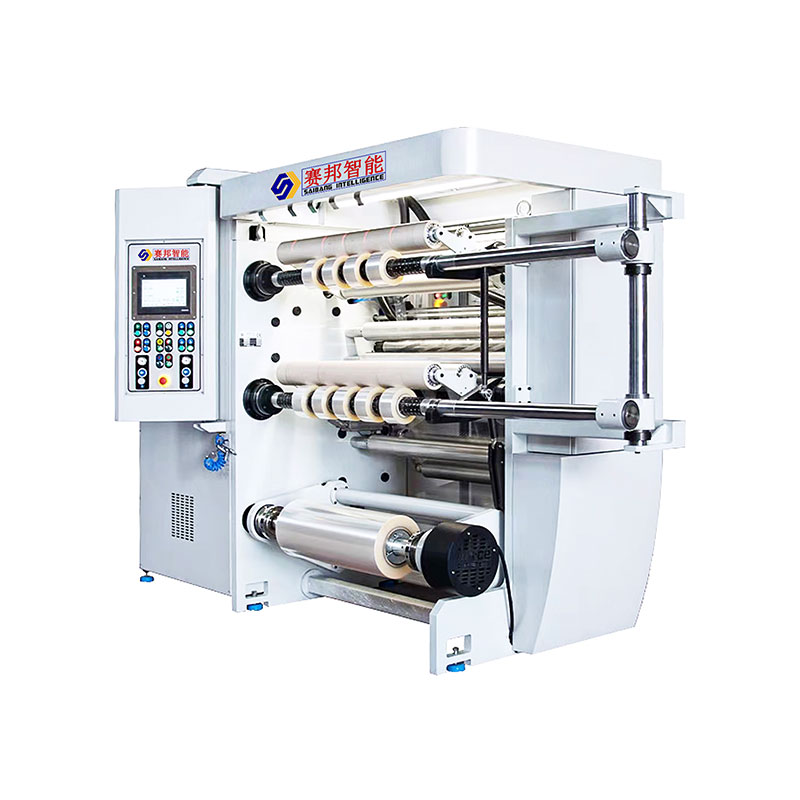
Sensor Drift And The Silent Erosion Of Material Yield
Accuracy in slitting is not just about the blades; it is about the feedback loop. Budget-friendly machines often rely on low-resolution ultrasonic or photoelectric sensors for web guiding and tension control. Over time, these sensors suffer from "drift," leading to slight deviations in the slit width or uneven rewinding tension. In a B2B environment where clients demand sub-millimeter precision for their automated packaging machines, even a 0.5mm error can result in an entire batch being rejected.
Sensor inaccuracies lead to "silent" costs—the material waste that accumulates at the edge of every roll. If your machine can't track the web precisely, your edge trim waste increases, and your usable yield drops. A professional-grade Automatic film slitting machine price reflects the integration of high-frequency sensors and PLC logic that adjusts in real-time. This level of precision ensures that the first meter of the roll is as perfect as the last, drastically reducing the scrap rate that eats into your monthly revenue.
Strategic OEM Customization For Long-Term Reliability
As a specialized supplier, we recognize that every converting project has unique mechanical stresses. A machine designed for thin BOPP film may struggle if it’s suddenly forced to process heavy-duty laminates without the proper structural reinforcements. Many low-cost vendors offer rigid, "as-is" models that cannot be adapted. This lack of flexibility means you are often forced to run the equipment at sub-optimal settings just to keep it from breaking down, which further complicates your maintenance schedule.
We operate with a strong focus on OEM and ODM collaboration, allowing us to reinforce specific machine components based on your intended material throughput. Whether it’s upgrading the air shafts to handle heavier mother rolls or customizing the slitting station for specialized abrasive coatings, our engineering team ensures the hardware is fit for purpose. By tailoring the machine's build to your specific operational load, we eliminate the friction points that lead to premature component fatigue. This proactive customization is far more cost-effective than the endless "patchwork" repairs required by generic, budget-tier machinery.
Conclusion
The allure of a cheap entry point in equipment procurement is often overshadowed by the high frequency of mechanical interventions. Frequent motor swaps and the constant recalibration of drifting sensors turn a "low-cost" machine into a financial burden. True profitability in film converting comes from sustained, high-speed uptime and near-zero material waste.
If your current workshop is struggling with inconsistent output or if you are tired of the hidden fees associated with maintaining unbranded equipment, we can help you evaluate a more stable path forward. We provide comprehensive technical audits and can guide you through the process of selecting a Automatic film slitting machine price that aligns with your actual production goals. Reach out to us to discuss your material specs—we offer on-site guidance and custom configuration services to ensure your next investment stays operational, not in the repair shop.