


How to Choose the Right Slitting Rewinding Machine for Your Production Line?
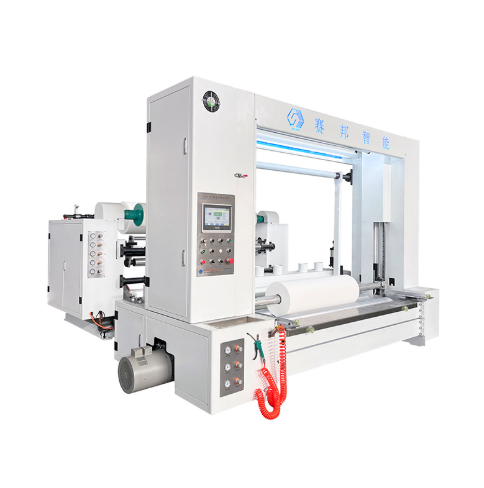
Choosing a slitting Rewinding Machine is an important decision for paper converting factories, packaging material suppliers, printing plants, and roll material processors. The right equipment can improve cutting accuracy, reduce waste, stabilize rewinding quality, and make daily production easier to manage.
A paper slitter rewinder machine is mainly used to slit large rolls into smaller rolls according to required width and winding standards. When buyers compare different slitter rewinder manufacturers, they should look beyond price and check whether the machine truly matches their material, output target, and long-term production needs.
Confirm Your Material And Roll Specifications
Before choosing a machine, buyers need to define the material clearly. Paper, coated paper, thermal paper, kraft paper, label paper, and packaging paper may all require different tension control and blade settings.
Roll specifications also matter. Parent roll width, finished roll width, roll diameter, core size, and material thickness will affect machine selection. If these details are not clear at the beginning, the machine may not run smoothly after installation.
For bulk production, a suitable machine should handle your regular materials with stable speed and consistent cutting quality.
Focus On Slitting Accuracy
Cutting accuracy is one of the most important performance points. Poor slitting can create rough edges, dust, uneven rolls, and material waste. These problems may affect downstream printing, packing, labeling, or converting processes.
A reliable paper slitter rewinder should provide clean cutting and stable edge quality during continuous operation. Blade quality, machine rigidity, tension control, and guiding accuracy all influence the final result.
For factories that need repeat orders and long-term output, stable accuracy is more valuable than short-term high speed.
Check Rewinding Quality
Rewinding quality decides whether the finished rolls are neat, tight, and ready for further use. If rewinding tension is unstable, the roll may become loose, wrinkled, uneven, or telescoped.
Buyers should check whether the machine can control rewinding pressure properly and support different roll sizes. Good rewinding helps reduce customer complaints and makes the finished product easier to store, transport, and use.
For paper converting projects, this detail directly affects product value.
Match Speed With Real Production Capacity
Many buyers pay close attention to machine speed, but higher speed is not always the best choice. If speed is too high for the material or operator level, waste may increase and cutting quality may become unstable.
A practical machine should balance speed, accuracy, safety, and maintenance. Stable daily operation often brings better long-term profit than a machine that only performs well under ideal conditions.
When selecting equipment, buyers should choose a speed range that fits real order volume and production habits.
Consider Operation And Maintenance
An easy-to-operate machine can reduce training time and improve production efficiency. Clear control panels, stable tension adjustment, simple blade setting, and convenient roll change all help operators work more smoothly.
Maintenance is also important. A machine with reasonable structure and accessible parts can reduce downtime. For overseas buyers, spare parts support and technical communication should be confirmed before ordering.
Good operation design reduces hidden costs after installation.
Review Customization Requirements
Different factories may need different configurations. Some require wider working width, some need special blade systems, and others may need changes in rewinding structure or control functions.
OEM/ODM customization can help buyers match equipment with their production line more accurately. Custom options may include:
working width adjustment
blade configuration
rewinding shaft design
tension control system
control panel language
safety protection details
Clear customization planning helps avoid unnecessary cost and improves machine suitability.
Evaluate Supplier Capability
A slitting rewinding machine is not a simple off-the-shelf purchase. Buyers need a supplier who can understand materials, production goals, and practical operation needs.
Before placing an order, it is useful to check technical communication, machine configuration, production lead time, export packaging, after-sales support, and spare parts availability.
A suitable supplier should provide practical recommendations, not only a quotation. This is especially important for buyers planning long-term production or machinery distribution.
Conclusion
Choosing the right slitting rewinding machine requires careful review of material type, roll size, slitting accuracy, rewinding quality, speed, operation, maintenance, customization, and supplier support.
For paper converting, packaging material production, and roll processing projects, the right machine can improve efficiency and reduce production risk.
Share your material type, parent roll size, finished roll width, speed requirement, and application needs with us. We can help review your production conditions and recommend a suitable slitting rewinding solution for your factory or project.