


How Much Is A Laminator?
When buyers search how much is a laminator, they are rarely asking for one simple number. In industrial production, the price of a laminator depends on far more than the machine itself. Width, speed, material compatibility, control system, heating method, automation level, unwinding and rewinding capacity, customization, and after-sales support all influence the final cost. That is why the price gap between two machines that look similar in photos can be very large in actual procurement.
For B-end buyers, this question is even more practical. A laminator is not a small office tool in this context. It is production equipment that directly affects output stability, labor efficiency, defect rate, and long-term maintenance cost. So when a buyer asks how much is a laminator, the better question is often this: what kind of laminator is suitable for the product, and what cost level makes sense for the expected production target?
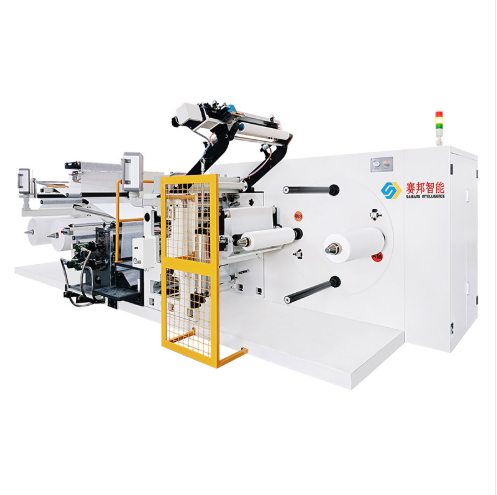
A heat press lamination machine like this one fits that discussion well. It is designed for hot air nonwoven and spunbonded nonwoven materials, with a 650 mm machine width, a normal running speed of 50 to 80 meters per minute, and a structure built for continuous production. That means it should be evaluated as a production asset, not only as a quoted machine price.
Why Laminator Prices Vary So Much
One reason buyers often struggle with laminator pricing is that the term itself is too broad. A laminator can mean a small desktop machine for document protection, or it can mean a full industrial line used for composite material production. The pricing logic is completely different.
In industrial manufacturing, the machine price reflects the process it is expected to handle. A laminator for light, low-speed work may be enough for simple output, but it will not deliver the same stability as a machine designed for continuous production with accurate pressure and temperature control. That is why price should always be discussed alongside material type, output goal, and quality expectations.
In many sourcing cases, the lowest quote is not the lowest real cost. A cheaper machine may require more manual adjustment, produce more waste, run less steadily, or create more downtime. Buyers who only compare initial quotations often discover later that production cost and service pressure are much higher than expected.
What Actually Affects The Price Of A Laminator
The first major factor is machine size. Width affects the frame structure, roller size, heating system, and overall production layout. This model uses a 650 mm machine width and a 600 mm finished product width, which places it in a practical range for many nonwoven material applications. A wider line usually costs more because it requires a larger structure and more powerful support systems.
The second factor is speed. A machine that can maintain stable lamination at higher speed usually involves better tension control, more reliable heating, and more refined control logic. This model is built with a mechanical speed of up to 80 meters per minute and a normal working speed range of 50 to 80 meters per minute depending on the material and pattern. That operating range matters because speed on paper is not enough. What buyers really pay for is usable speed with acceptable quality.
The third factor is process flexibility. A laminator that can handle different materials, support pattern customization, and adjust pressure and temperature for different bonding conditions has more value than a fixed-function system. For buyers supplying multiple markets or planning future product expansion, this flexibility can be more important than getting the lowest possible initial quote.
Why Control Systems Matter In Pricing
Many buyers focus first on width and speed, but control systems often have a strong influence on real machine value. A laminator with a touch-screen interface, real-time operating control, and easier parameter adjustment may cost more at the start, but it can reduce setup time and operator error in daily production.
This is especially important in lamination because quality does not depend on one setting. Temperature, pressure, and line speed work together. When the machine allows those parameters to be adjusted clearly and consistently, the line becomes easier to manage. For factories producing different patterns or changing materials from order to order, that is a major benefit.
This is one of the reasons industrial laminator pricing should not be judged by hardware alone. Buyers are also paying for process stability. In many factories, stability matters more than theoretical output. A machine that runs smoothly every day is worth more than a machine that looks cheaper but creates repeated adjustments and quality risk.
The Hidden Costs Buyers Often Miss
When people ask how much is a laminator, they often focus only on purchase price. In reality, the total cost includes installation, operator training, spare parts, maintenance, energy use, downtime risk, and defect loss.
For example, if the heating system is uneven or the tension system is difficult to control, the machine may still run, but the bonding result may become inconsistent. That can lead to rejected material, slower production, and extra labor for adjustment. In high-volume operations, these hidden costs often exceed the price difference between one machine and another.
Another overlooked factor is roll handling capacity. This machine uses an unwinding diameter of 1200 mm and a winding diameter of 800 mm. Larger roll handling helps reduce frequent changeovers, which improves line continuity. For a buyer focused on production rhythm, that detail has real value because fewer roll changes usually mean more efficient operation over a shift.
How Buyers Should Compare Laminator Quotes
A useful comparison should start with the application, not the price list. Buyers should first define what the machine needs to laminate, what output speed is realistic, what level of finish quality is required, and whether the machine will be used for one product or several.
After that, quote comparison becomes more meaningful. A lower price may be reasonable if the application is simple and output demand is modest. But if the buyer needs repeatable performance, pattern customization, stable temperature and pressure control, and room for production growth, then a more capable machine is usually the better investment.
This is where many B-end buyers feel pressure. They want to control budget, but they also know that under-spec equipment can become a long-term problem. That is why the most useful supplier conversation is not just about how much is a laminator. It is about which configuration fits the material, the target market, and the expected production plan.
Why Application Decides Value
The same laminator does not have the same value in every factory. In medical, hygiene, textile, packaging, and consumer product manufacturing, the demands can be very different. Some buyers care most about speed. Others care more about pattern quality, bond consistency, or reduced failure rate.
A heat press lamination machine built for nonwoven and related materials makes sense where hot pressing and composite stability are central to product performance. If the buyer is making products such as sanitary materials, protective layers, or other composite nonwoven items, then machine control and bonding consistency become part of product quality, not just machine performance.
This is why value should be measured against the production result. A laminator that supports better bonding, smoother control, and more stable running often delivers a stronger return over time than a cheaper model chosen only to reduce initial spend.
What A Practical Buyer Usually Wants To Know
Most professional buyers are not really looking for the lowest headline price. They want to know whether the machine is easy to operate, whether it can maintain stable performance, whether it fits their material range, and whether the supplier can support customization and service.
This product supports OEM and ODM, adjustable heat pressing, intelligent control, and pattern customization. Those points matter because industrial buyers often need more than a standard machine. They may need a configuration that fits their line, product style, or market specification. In those situations, price becomes part of a larger decision that includes compatibility, efficiency, and support.
A practical buyer also wants fewer surprises after purchase. That means the more clearly the production goals are defined before quotation, the more accurate and useful the price discussion becomes.
Conclusion
So, how much is a laminator? In industrial production, the answer depends on the machine’s width, speed, material range, heating and pressure control, automation level, customization, and the level of stability the buyer expects in daily use. A heat press lamination machine is not just priced as equipment. It is priced as part of a production solution.
For buyers working with nonwoven and related materials, the more useful approach is to look beyond the initial quotation and focus on how well the machine fits the actual job. A laminator that matches the material, runs steadily, and reduces production loss is usually the more cost-effective choice over time.
If you are comparing laminator options and want a clearer idea of what configuration suits your material, output target, and budget range, feel free to contact us. We can help you review your production needs and suggest a more practical solution for your application.
Previous: