


What Is a Nonwoven Fabric Embossing and Perforating Machine?
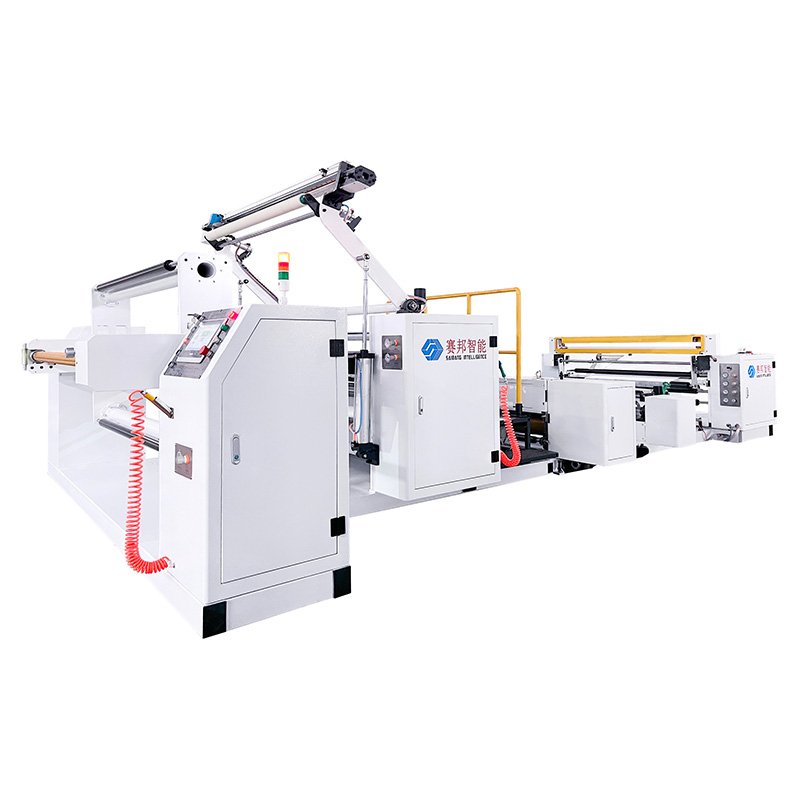
A nonwoven fabric embossing and perforating machine is a converting system designed to modify the surface structure of nonwoven materials by creating controlled patterns and precision micro-perforations.
Unlike basic web handling equipment, this machine changes the physical characteristics of the material. It enhances texture, improves functional performance such as airflow or liquid distribution, and prepares the web for downstream processing in hygiene, medical, and protective product manufacturing.
In modern nonwoven production, embossing and perforating are not decorative steps. They are structural operations that influence product quality, usability, and market positioning.
You can explore SAIBANG system configurations on our Embossing Machine page: Nonwoven Fabric Embossing and Perforating Machine
Why Embossing Is Used in Nonwoven Production
Embossing introduces a controlled 3D surface pattern onto the nonwoven web through synchronized roller pressure and precision alignment.
This process serves several functional purposes:
Improves surface softness perception
Enhances visual differentiation
Stabilizes web structure during lamination
Reduces fiber shifting under tension
For hygiene and medical materials, embossing can also support bonding consistency and structural integrity. A stable embossing process ensures the pattern remains uniform across the full width, even at industrial production speeds.
When embossing depth fluctuates, the finished roll quality becomes inconsistent. That is why machine rigidity, roller precision, and web guidance accuracy are critical engineering factors.
What Perforating Adds to the Material
Perforating introduces evenly spaced micro-holes across the web. These perforations allow controlled airflow or liquid transfer depending on the product application.
In hygiene materials, perforation may improve breathability and fluid distribution. In protective and medical materials, it can support air circulation while maintaining structural form.
The challenge is control. Excessive force can tear fibers, while insufficient penetration results in incomplete perforation. Therefore, perforating must be synchronized with web speed, tension level, and material thickness.
A properly engineered perforating system delivers clean hole formation without distorting surrounding fibers.
How the Machine Works in Practice
A nonwoven fabric embossing and perforating machine typically follows a coordinated process:
Web unwinding and stabilization
The material is unwound under controlled tension to prevent edge drifting.Embossing section
Patterned rollers apply consistent pressure to create uniform texture across the width.Perforating section
The web passes through precision perforation tooling aligned with the running speed.Rewinding with tension control
The finished material is wound evenly to maintain roll consistency and downstream usability.
Stable production speed usually ranges between 60–100 m/min depending on material and pattern design. Design speeds can reach higher values, but long-term consistency is always prioritized over peak speed claims.
Typical Configuration Parameters
While each project differs, below is a general reference of common platform capabilities in industrial nonwoven embossing systems:
| Parameter | 1400mm Platform | 1600mm Platform |
|---|---|---|
| Finished width | 1400 mm | 1600 mm |
| Embossing width | 1460 mm | 1660 mm |
| Unwinding diameter | 1200 mm | 1200 mm |
| Winding diameter | 800 mm | 800 mm |
| Design speed | 120 m/min | 120 m/min |
| Stable working speed | 60–100 m/min | 60–100 m/min |
The correct selection depends on product layout, substrate type, and output planning.
Why Customization Matters
Nonwoven materials differ in fiber density, bonding structure, and thickness. A standard configuration may work for one substrate but cause instability in another.
A custom nonwoven embossing machine solution considers:
Material type (hot air nonwoven, spunbonded nonwoven)
Required emboss depth and pattern clarity
Hole diameter and spacing consistency
Desired line speed and production volume
Integration with upstream and downstream modules
This system-level engineering approach creates a more durable embossing and perforating machine capable of long-term industrial operation.
Conclusion
A nonwoven fabric embossing and perforating machine is a precision converting system that enhances material texture, structural stability, and functional performance. It plays a key role in hygiene, medical, and protective material production by combining surface pattern control with airflow or liquid management capabilities.
The right configuration is determined not only by width and speed, but by how well the system matches your material behavior and production objectives.
If you are evaluating embossing and perforating equipment, share your substrate type, target width, pattern requirements, and expected output. SAIBANG can recommend a suitable configuration and provide technical guidance tailored to your project.