


How Does A C-Folding And Festooning Machine Work?
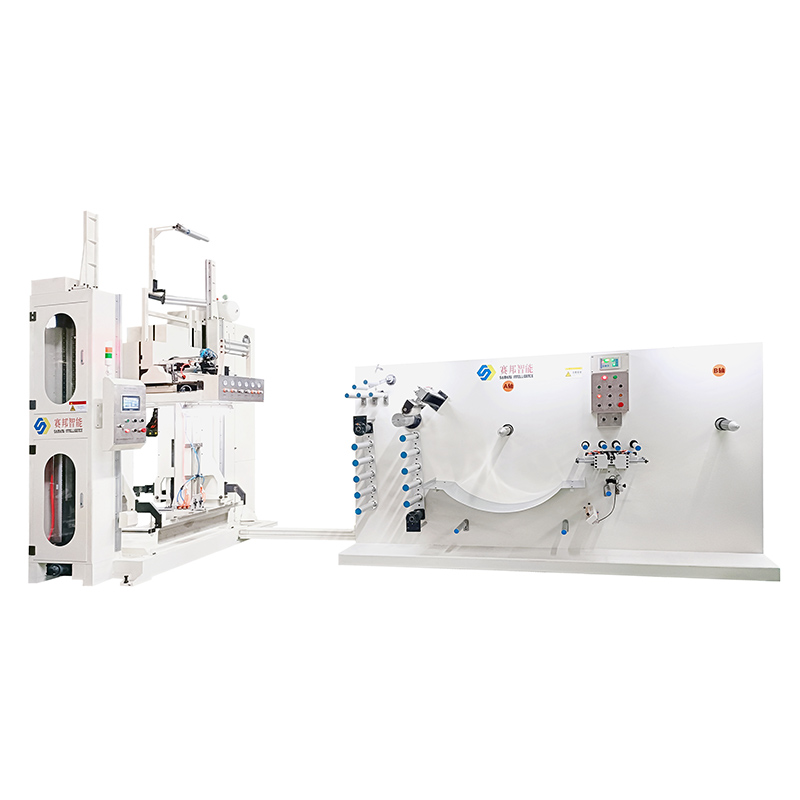
A C-folding and festooning machine is a converting unit used in hygiene production to take a continuous web such as a SAP sheet or nonwoven strip and turn it into stable, stack-ready folded packs. Instead of rewinding the web into rolls, the machine forms repeatable C-shaped folds and then accumulates them in a controlled festoon pattern, so the material can be transferred smoothly to the next process with consistent length, alignment, and tension behavior.
In diaper and absorbent product manufacturing, this step matters because SAP sheets and lightweight nonwovens are sensitive to stretching and edge wandering. A well-designed C-folding and festooning process reduces web damage, keeps fold geometry consistent, and improves downstream feeding reliability. You can explore SAIBANG configurations within our diaper making machine solutions to see how this module fits into complete production lines.
What C-Folding Means In SAP Sheet Processing
C-folding refers to a specific folding geometry where the web is folded back onto itself into a compact profile resembling a C shape in cross section. The goal is not only to reduce length and create a manageable pack, but also to keep the fold edges clean and consistent so the folded sheet can be placed or fed precisely.
For SAP sheet applications, material width commonly falls within practical ranges such as 85–120 mm, while the effective width for C-folding material handling can be configured around 135–260 mm depending on line design and product layout. A stable folding path ensures the SAP sheet does not crack, curl, or drift, which helps keep absorbent performance consistent after assembly.
What Festooning Does And Why It Is Used
Festooning is a controlled accumulation method. Instead of stopping the upstream process when downstream equipment pauses, the machine stores web length in loops within a festoon zone. This creates a buffer that stabilizes flow and protects the web from sudden tension spikes.
In a hygiene workshop, festooning supports continuous operation because it decouples speed differences between modules. When the next station slows briefly or performs a transfer action, the festoon zone absorbs the speed change. When the next station resumes normal speed, the buffer is released in a controlled way. This is a practical advantage in real production where uptime depends on keeping web tension stable and avoiding breaks.
The Core Working Principle Step By Step
A C-folding and festooning machine works through a coordinated sequence of web handling, folding, buffering, and stacking. While the mechanical layout can vary by model, the functional logic stays consistent.
Web feeding and tension stabilization
The machine receives SAP sheet or nonwoven from an unwind section. Large unwind capability is important for stable feeding, and configurations may support unwind diameters around 1200 mm to reduce roll change frequency. The web is guided and tensioned so it enters the folding section flat and centered.C-fold forming and length control
The folding section uses guides, plates, and synchronized rollers to form the C shape with repeatable geometry. Length control is managed by coordinated drive timing so each fold matches the target pitch. In stable production, normal working speeds can run around 180–250 m/min, with design speeds reaching up to 300 m/min depending on configuration and material behavior.Festoon buffering and flow balancing
After folding, the web is accumulated into loops within the festoon area. Sensors monitor loop depth so the machine can adjust infeed and outfeed speeds. This prevents sudden pulls that could distort fold shape or stretch lightweight nonwoven.Stacking, packaging preparation, and transfer
The folded material is delivered as neat stacks ready for the next step, whether that is packaging, placement, or integration into a larger diaper converting line. In double-station designs, changeover and continuous running can be supported more efficiently, helping reduce interruptions during long production shifts.
Why Double-Station Design Improves Production Continuity
In high-volume hygiene production, the machine must support both speed and continuity. A double-station layout typically helps by enabling smoother transitions during handling actions such as receiving, stacking, or transferring folded packs. The result is fewer stops and more stable running, especially when multiple modules are linked together.
This is one reason many large-scale lines specify a durable C-folding and festooning unit rather than a basic folding module. The goal is not simply folding, but consistent folding under real factory conditions.
Key Parameters That Define Performance
A C-folding and festooning machine is best evaluated by how it protects the web while maintaining repeatability. The most practical parameters include material adaptation range, stable working speed window, unwind capacity, and fold consistency at speed.
Below is a quick reference for typical evaluation points used during project planning.
C-Folding And Festooning Evaluation Points
| Evaluation Point | What It Impacts In Production |
|---|---|
| Material adaptation for SAP sheet and nonwoven | Stability of folding and web handling across different substrates |
| Stable working speed window | Output continuity without fold deformation |
| Maximum design speed capability | Headroom for future capacity upgrades |
| Unwind diameter capacity | Roll change frequency and feeding stability |
| Fold repeatability and stack neatness | Downstream feeding reliability and scrap reduction |
For projects that require specific widths, fold pitches, or line interfaces, a custom C-folding and festooning machine configuration is often the most practical approach, because it aligns the folding geometry and buffering behavior with the real product design and plant rhythm.
How SAIBANG Integrates The Module Into Complete Hygiene Lines
A folding and festooning machine rarely works alone. Its performance depends on how well it matches the upstream unwind, the downstream placement or packing station, and the overall speed strategy of the line. SAIBANG focuses on system-level matching so the module supports stable web flow and efficient changeover logic within a complete solution.
To review how this unit is applied within full production layouts, you can browse our diaper making machine solutions and compare different module combinations for SAP sheet processing and nonwoven handling.
Conclusion
A C-folding and festooning machine works by stabilizing web tension, forming consistent C-shaped folds, buffering material in a festoon zone, and delivering neat stacks for downstream processing. This workflow protects sensitive SAP sheets and nonwovens from stretching and misalignment while supporting continuous operation at industrial speeds. When the machine is engineered to match material behavior, width range, and line rhythm, it becomes a reliable productivity module rather than a simple folding device.
For engineering consultation, configuration planning, or line integration guidance, contact SAIBANG and share your material type, target width, speed requirement, and downstream process layout. Our team can recommend a suitable configuration and provide practical setup support for your project.
Previous:
Next: What Are The 5 Benefits Of A SAP Core Sheet Making Machine?