


How SAIBANG Supports Custom Nonwoven Slitting Machine Solutions?
In modern hygiene and medical material production, a standard slitting configuration is rarely sufficient. Nonwoven converters operate under varying material widths, basis weights, fiber structures, and downstream processing requirements. A high-output line processing spunbond fabric behaves very differently from one handling melt-blown or fluffy nonwoven. For this reason, sourcing a nonwoven Slitting Machine is not only about speed or width; it is about how precisely the equipment matches the production environment.
SAIBANG focuses on delivering custom Nonwoven Slitting Machine solutions engineered around real plant conditions. Instead of offering fixed specifications, we build each configuration based on material behavior, capacity goals, and long-term expansion planning.
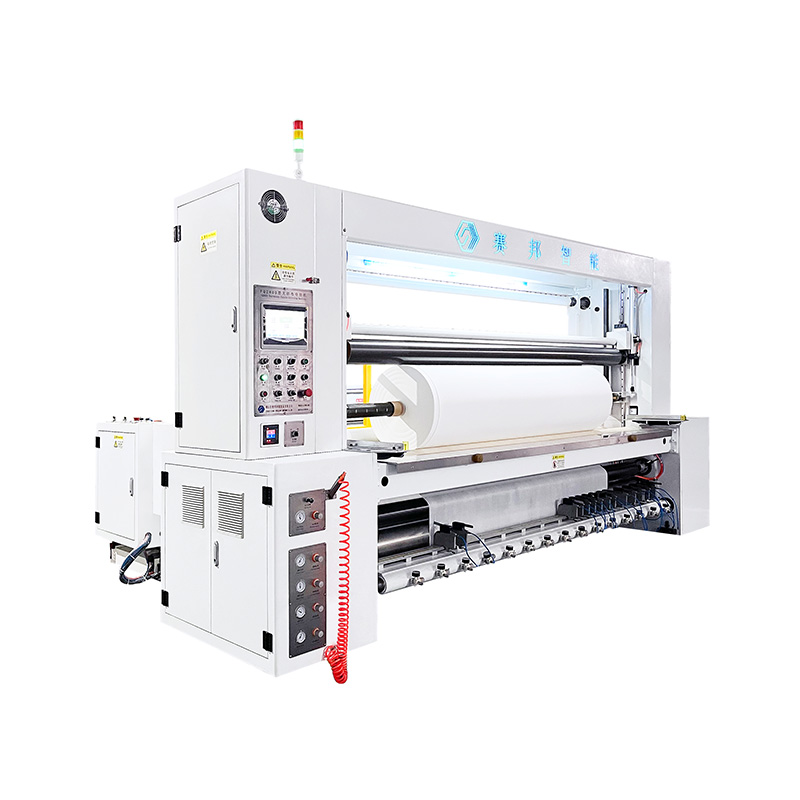
Engineering Around Real Production Requirements
Every customization project begins with a structured technical evaluation. Our engineering team collects detailed production parameters, including parent roll width, maximum unwind diameter, target finished roll widths, mechanical speed requirements, and material type. These inputs determine the structural platform of the machine.
For example, wide-format configurations in the 3000–4600 mm range require reinforced frames, balanced roller systems, and synchronized drive architecture to maintain web stability at high mechanical speeds. Smaller-format lines prioritize flexibility and quick width adjustment. By aligning machine width, shaft capacity, and drive power with actual production data, SAIBANG ensures the final configuration is both technically suitable and commercially efficient.
This approach avoids under-specification that causes bottlenecks and over-specification that increases unnecessary capital cost.
Core Component Customization For Precision Slitting
Precision cutting performance depends heavily on component engineering. SAIBANG supports customization of critical slitting assemblies based on material thickness and fiber structure.
High-accuracy slitting knife systems are selected and calibrated according to basis weight and edge quality requirements. Unwinding shafts are reinforced to handle large parent roll diameters, often up to 1200–1300 mm depending on the configuration. Rewinding shafts are designed to support finished roll diameters up to 900–1200 mm, ensuring stable roll hardness control.
When higher speeds are required, structural rigidity becomes a determining factor. Reinforced machine frames, optimized roller balancing, and synchronized servo or inverter drive systems help maintain edge consistency even under demanding mechanical speeds. This level of customization improves finished roll quality while reducing vibration-related defects.
Material-Specific Process Optimization
Not all nonwoven behaves the same during slitting. Spunbond, spunlace, melt-blown, hot air nonwoven, and air-laid materials each have distinct tension sensitivity and edge behavior. SAIBANG engineers adjust process parameters accordingly.
Tension zones are configured to prevent web stretching or compression. Slitting blade pressure is optimized to avoid fuzzing or micro-cracks along the edge. Web guiding sensitivity is calibrated to maintain alignment at both low and high speeds. Rewinding pressure curves are adjusted to maintain consistent roll density without deformation.
This process-level adaptation transforms the machine into a practical nonwoven slitting machine solution rather than a generic cutter. The result is improved yield, reduced trim waste, and more stable downstream performance.
Intelligent Control And Automation Integration
Automation plays a key role in operational efficiency. SAIBANG integrates control systems tailored to the customer’s production model. PLC systems, touch-screen interfaces, and tension monitoring modules can be configured according to operator workflow and plant layout.
For facilities seeking higher automation levels, optional modules can include online monitoring, production data tracking, and MES system interfacing. These features allow production visibility and faster troubleshooting. By combining mechanical reliability with digital control, the machine becomes a durable nonwoven slitting machine platform capable of supporting continuous high-volume operation.
Automation customization also reduces setup time during width changes and improves repeatability across shifts, helping stabilize long-term output quality.
Capacity Planning With Future Expansion In Mind
Production needs rarely remain static. Many hygiene and medical material converters plan for product diversification or capacity growth. SAIBANG considers expansion potential during the initial design phase.
Machine platforms can be configured with scalable drive systems and modular structures, allowing future upgrades without replacing the entire line. This forward-looking design protects investment and supports evolving production strategies.
Whether a facility requires a compact configuration for moderate output or a wide, high-speed platform for large-scale programs, customization ensures alignment with both present demand and long-term development.
Structured Customization Workflow
To ensure reliability and clarity, SAIBANG follows a structured project workflow:
| Stage | Focus Area | Outcome |
|---|---|---|
| Technical Evaluation | Material and production parameter review | Configuration definition |
| Engineering Design | Mechanical and process matching | Customized system layout |
| Manufacturing | Precision assembly and quality inspection | Stable mechanical platform |
| Installation & Commissioning | On-site setup and testing | Production readiness |
| After-Sales Support | Technical guidance and troubleshooting | Long-term operational stability |
Each phase ensures the final nonwoven slitting machine meets performance expectations before full-scale production begins.
Conclusion
A nonwoven slitting machine creates real value only when it is engineered around the material, speed, and downstream requirements of the converting line. SAIBANG supports custom nonwoven slitting machine projects through application-based design, precision component customization, material-specific process optimization, intelligent control integration, and scalable capacity planning.
If you are evaluating new slitting equipment or upgrading an existing converting line, share your material specifications, target widths, and output goals with our team. SAIBANG can provide practical configuration guidance and tailored solutions designed to improve efficiency, reduce waste, and support long-term production growth.