


How Much Is A Laminating Machine?
If you are comparing laminating equipment for nonwoven, film, or multi-layer composite materials, the first question is usually pricing. The short answer is that Laminating Machine cost depends on width, process type, target speed, automation level, and the materials you need to bond. This guide explains typical price ranges, the main cost drivers, and how to request a quotation that matches your real production needs.
To view SAIBANG’s equipment options, you can start from our laminating machine range.
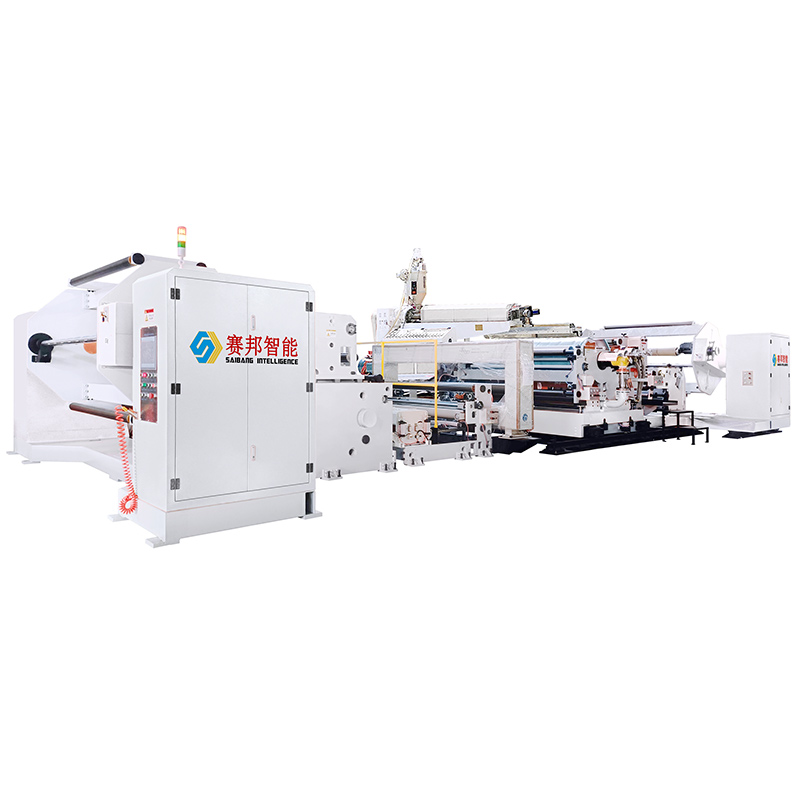
Typical Price Ranges By Laminating Machine Type
Laminating machines are not priced like standard office equipment. They are production assets, so the cost is usually tied to line capability and configuration. Below are common market ranges to help you build a realistic budget.
| Type | Typical Use | Typical Price Range |
|---|---|---|
| Ultrasonic laminating machine | Nonwoven to film, nonwoven to nonwoven, hygiene materials | USD 30,000 to 250,000 |
| Hot press laminating machine | Sanitary materials, nonwoven composites, stable bonding with pressure and heat | USD 40,000 to 220,000 |
| Hot melt adhesive laminating machine | Film, nonwoven, breathable fabrics, multi-layer structures | USD 80,000 to 450,000 |
| High speed coating laminating machine | Coating plus lamination for large-scale output | USD 200,000 to 900,000 |
| Extrusion coating laminating production line | Extrusion coating, high-output packaging and industrial laminates | USD 500,000 to 2,500,000 |
These ranges vary by region and spec, but they reflect how buyers typically evaluate an industrial laminating machine price before final engineering.
The Core Factors That Decide Laminating Machine Cost
A laminating machine quote is usually built from a few technical decisions. If two suppliers look similar on paper, these are often the hidden differences.
Working Width And Structure Strength
Width is one of the biggest drivers because it affects:
Frame rigidity and machining accuracy requirements
Roller diameter and balancing grade
Web guiding and tension stability across the full width
A 650mm class machine and a 2500mm class machine do not scale linearly in cost, because the mechanical and control tolerances become harder at wider widths.
Lamination Process And Bonding System
Process type changes the bill of materials and control complexity.
Ultrasonic systems require stable frequency output and consistent energy transfer, which is tied to generator and transducer performance. SAIBANG-grade configurations focus on frequency stability and conversion efficiency targets to keep bonding consistent across long runs
Hot melt systems add adhesive application control, heating stability, and safety design
Hot press systems rely on pressure uniformity and temperature control, which directly affects bonding uniformity
Coating and extrusion lines expand into heating zones, coating heads or dies, chill rolls, and larger power demand
This is why ultrasonic laminating machine cost and hot melt laminator pricing often sit in different ranges even at the same width.
Target Speed And Yield Expectations
A higher design speed usually requires:
Higher response servo control and tighter motion accuracy
Better roller surface finish and durability
More stable tension control across acceleration and deceleration
In SAIBANG’s technical configuration logic, key components can be selected in tiers, and high-end options are designed to support higher precision and longer life under continuous operation. That tier choice often becomes a major part of your final quotation.
Automation Level And Digital Integration
Automation is not only for convenience, it is often for stability and repeatability.
Depending on your plant goal, a laminating machine can be configured with:
PLC control and HMI recipe storage
Online detection and feedback control
MES data connection for traceability and production reporting
These options add cost upfront, but they reduce manual adjustment and can improve consistency when you run multiple product SKUs.
Material Compatibility And Finished Product Standard
The more materials you want to laminate, the more flexibility the machine needs. Material variables that impact price include:
Nonwoven basis weight range and elasticity
Film thickness and shrink behavior
Breathable film requirements
Finished product surface feel targets and bond strength standards
For customers with special materials or new product plans, SAIBANG typically builds the quotation around a requirement analysis and a solution that can be implemented reliably, rather than a generic configuration.
Costs Beyond The Machine Price
Many buyers underestimate the full project cost. When comparing quotations, include these items early:
Tooling or bonding pattern parts if required
Installation, commissioning, and operator training
Electrical and utility readiness in your plant
Spare parts strategy and service response plan
A supplier with clear quality control and supplier management standards usually reduces long-term risk. SAIBANG’s approach emphasizes qualification control, process inspection, and predictable service support for core components.
How To Get An Accurate Quote Faster
To avoid multiple quotation revisions, prepare a short spec sheet with these points:
Target materials to laminate, including thickness or basis weight range
Working width and finished roll size requirements
Required output speed or daily capacity target
Bonding method preference, ultrasonic, hot melt, hot press, coating, or extrusion
Automation expectations, recipe storage, online monitoring, MES connection
Finished product quality focus, bond strength, softness, surface uniformity
If you are planning future expansion, mention it. SAIBANG also supports capacity and upgrade planning with modular thinking, so your equipment can be aligned with current output and future growth.
Why SAIBANG Quotes Are Built Around Real Production Needs
Lamination performance is only as good as the match between your materials, your process window, and your equipment configuration. SAIBANG focuses on:
Requirement-driven solution building and technical feasibility
Component and process parameter optimization for stable output
Scalable automation options for consistent production management
Quality and service systems designed to protect long-term operation
This is the practical path to a quote that reflects your real total cost of ownership, not only the initial invoice.
Conclusion
A laminating machine can cost from tens of thousands to several million dollars depending on width, bonding process, speed, automation, and the materials you need to laminate. The best pricing decision comes from matching your product structure and output target to the correct configuration, then comparing quotations on stability, service, and upgrade potential, not only on headline price.
If you want a faster, more accurate quotation, share your material stack, working width, target speed, and automation needs with SAIBANG. Our team can recommend a suitable configuration and provide guidance on process setup, integration, and commissioning to help you move from planning to stable production.