


Which Industry Applications Benefit Most From Co Extruded Cast Film
Co extruded cast film is widely used when a single polymer layer cannot meet the full set of performance requirements for modern packaging and industrial films. Many applications need a balance of sealability, toughness, optics, barrier behavior, surface friction control, and process stability. Co extrusion solves this by combining multiple materials into one film structure, allowing each layer to carry a specific function. Cast film technology further improves thickness uniformity, surface flatness, and clarity by quenching the melt on a chilled roll rather than stretching it like blown film.
At SAIBANG, we build casting lines that support multi-layer structures, stable gauge control, and repeatable surface quality. This makes co extruded cast film a practical platform for brands and converters that need consistent performance across high-volume production. You can review our casting line solutions here: Casting Machine.
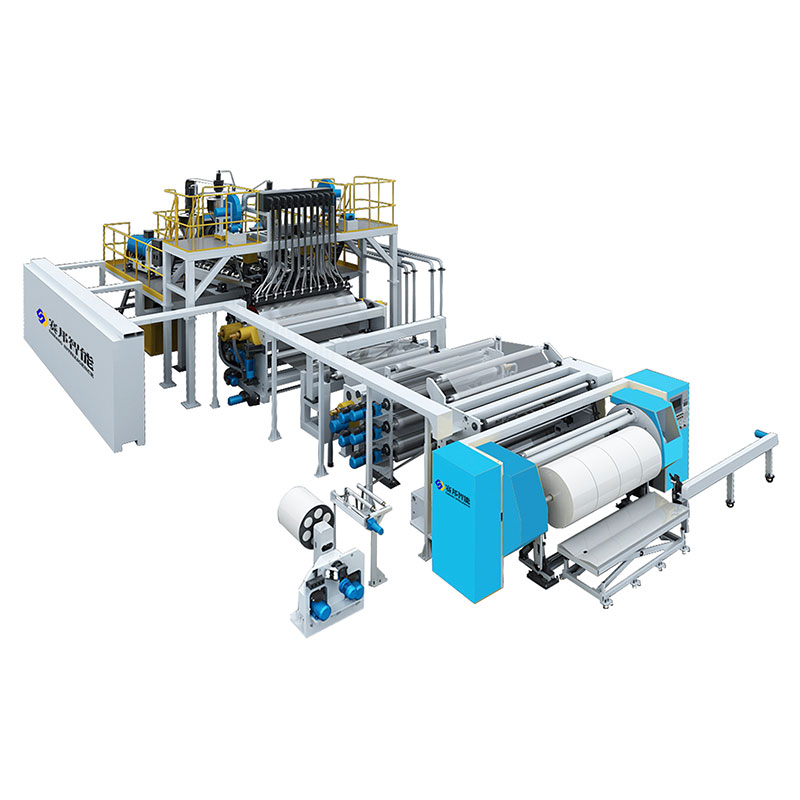
What Co Extruded Cast Film Is
Co extruded cast film is a multi-layer plastic film produced by extruding two or more polymer melts at the same time and combining them through a feedblock or multi-manifold die. The combined melt is then cast onto a chilled roll to solidify rapidly, creating a film with controlled thickness and surface characteristics.
Co extrusion is not only about adding layers. It is about engineering layer functions. Typical functional roles include:
A sealant layer designed for heat seal behavior, seal strength, and hot tack response
A core layer designed for stiffness, puncture resistance, or cost efficiency
A surface layer designed for printability, slip and anti-block behavior, or tactile feel
Optional barrier layers designed for aroma retention or moisture control depending on polymer system
Cast film processing is especially valuable when applications require:
High transparency and smooth surface
Tight thickness tolerances for downstream converting
High output with stable web handling
Consistent winding behavior at speed
How Co Extruded Cast Film Is Made
A co extruded cast film line integrates multiple extrusion and control modules into one continuous process. The goal is to stabilize melt flow, combine layers accurately, and quench the film fast enough to lock in structure while preserving optical quality.
A typical production flow includes:
Resin feeding and drying when required
Different polymers have different moisture sensitivity and melt stability needs. Material conditioning reduces bubbles, gels, and viscosity variation.Multi-extruder melt generation
Each layer usually has its own extruder so temperature profile, screw design, and melt pressure can be tuned to the layer’s function.Layer combination through feedblock or die manifold
Layer thickness ratios are controlled here. Stability matters because small ratio drift can change sealing behavior, stiffness, or surface friction.Casting and rapid quenching on chilled roll
The melt curtain meets the chill roll, freezing the film structure quickly. This supports clarity, flatness, and gauge uniformity.Thickness measurement and automatic gauge control
Online gauge control compensates for flow variation and supports consistent film performance across the full web width.Edge trim, corona treatment, winding, and optional inline lamination
Surface treatment improves ink anchorage and lamination performance. Winding stability supports downstream slitting and converting.
For converters, the practical value is production repeatability. When the line is configured correctly, you can maintain film properties across long runs with less rework and fewer quality disputes.
Industry Applications That Benefit Most From Co Extruded Cast Film
Co extruded cast film delivers the most value in industries that demand multi-property balance and high converting efficiency. These are applications where a single-layer film would either fail performance requirements or drive cost too high.
Food Packaging And Freshness Management
Food packaging often needs strong seals, stable optics, and controlled moisture behavior. Co extrusion allows a sealant layer optimized for heat sealing while the core layer supports stiffness and puncture resistance. Cast film clarity supports product visibility for retail and reduces haze that can make products appear less fresh.
Typical product formats include pouch laminations, flow-wrap structures, and lidding applications where seal reliability and aesthetics both matter.
Hygiene And Medical Consumables
Hygiene products often require consistent thickness, controlled softness, and stable tensile behavior for high-speed converting. Co extruded cast film supports engineered feel and surface friction behavior, which influences machine handling and product comfort. In medical consumables, stable film surface and dimensional uniformity support controlled packaging and consistent sealing.
Industrial Protective Films And Surface Protection
Surface protection films rely on predictable cling or adhesion behavior and controlled slip for easy application and removal. Co extrusion can place functional additives on the surface layer while keeping the core cost-efficient. Cast film’s flatness and gauge control improve protection uniformity and reduce wrinkles during application.
Logistics And Stretch-Wrap Related Converting
Cast film is widely used in stretch film and related logistics packaging because thickness uniformity translates into stable stretch behavior and predictable holding force. Multi-layer design enables a combination of toughness and cling while controlling cost by optimizing layer ratios.
Agriculture And Specialty Films
Agricultural films often need durability, toughness, and surface stability in outdoor environments. Co extruded structures can incorporate functional layers for mechanical strength, surface slip control, and optional barrier behavior depending on the use case. Cast film processing supports even thickness across wide webs, improving field performance consistency.
Application-to-benefit map
| Industry Application | What The Film Must Deliver | Why Co Extruded Cast Film Fits |
|---|---|---|
| Food packaging | Seal reliability, optics, puncture resistance | Layered sealant plus structural core with high clarity |
| Hygiene and medical | Stable handling, consistent thickness, controlled feel | Multi-layer control and flat, repeatable gauge |
| Surface protection | Slip control, uniform coverage, removal behavior | Functional surface layer with stable cast flatness |
| Logistics stretch converting | Predictable stretch and holding force | Tight gauge control and multi-layer toughness/cling |
| Agriculture and specialty | Durability and consistent performance | Layer function separation and wide-web uniformity |
What To Consider When Sourcing Co Extruded Cast Film And Casting Lines
Selecting co extruded cast film is only reliable when the film design and the production line capability match. Many quality issues originate from misalignment between the target film structure and the real stability limits of the line.
Key sourcing and specification factors include:
Layer count and layer ratio control
The line must hold layer ratios consistently. If ratios drift, sealing, slip, or stiffness changes across a roll and causes converting instability.Melt stability and temperature management
Different polymers require different thermal windows. Poor thermal control increases gels, degraded odor, and surface defects.Gauge profile control and thickness tolerance
Applications like stretch converting and lamination are sensitive to gauge variation. Stable thickness reduces scrap and improves downstream yield.Surface treatment capability
If printing and lamination are required, corona treatment stability and treatment uniformity become essential for ink adhesion.Additive strategy and surface friction management
Slip and anti-block systems should be aligned with your converting speed and packaging format. Over-slip can reduce print adhesion. Under-slip can cause blocking and winding issues.Winding stability and roll hardness control
Even a good film can become unusable if roll formation is unstable. Proper tension and winding control prevents telescoping and edge damage.
At SAIBANG, we focus on casting line configurations that support stable layer combination, reliable gauge control, and repeatable surface quality for converters who need industrial-scale consistency. You can review our solutions here: Casting Machine.
Conclusion
Co extruded cast film is a multi-layer film structure produced by combining multiple polymer melts through co extrusion and then quenching on a chilled roll. This approach enables engineered layer functions such as sealability, toughness, surface control, and optical performance in one film. Industries that benefit most include food packaging, hygiene and medical consumables, industrial surface protection, logistics stretch converting, and agriculture films, where performance consistency and converting efficiency are critical. The most important sourcing considerations include layer ratio stability, thermal management, gauge control, surface treatment capability, additive strategy, and winding stability.
If you are planning a co extruded cast film project and want guidance on layer design, line configuration, or performance targets for your application, you can consult SAIBANG for support. Share your target film width, thickness range, layer structure goals, and downstream converting method, and we will recommend a suitable casting line configuration and provide practical technical guidance.