


Why Pre-Delivery Testing Is Critical For Industrial Equipment Projects
In industrial equipment projects, the true cost is rarely the purchase price alone. The bigger risk sits in commissioning delays, unstable output, inconsistent quality, and hidden rework that only appears after the machine is on your shop floor. Pre-delivery testing is the step that turns a specification into verified performance before shipment, so your acceptance is based on evidence, not assumptions.
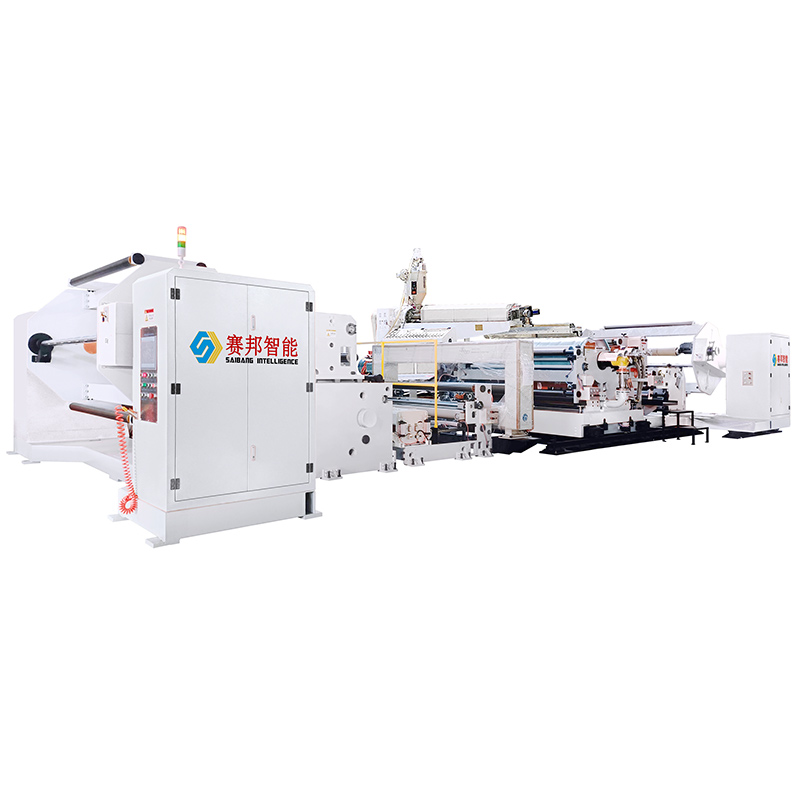
At SAIBANG, we treat pre-delivery testing as a project gate that links manufacturing quality, process tuning, and delivery readiness. It is how we make sure the equipment you receive can reach the agreed targets faster, with fewer start-up surprises. You can view our equipment range here: Industrial Equipment Products.
What Pre-Delivery Testing Actually Prevents In Real Projects
A machine can look perfect at rest and still fail in production. Pre-delivery testing exists to eliminate the most expensive categories of failure before shipping:
Commissioning drag: unstable parameters, misaligned assemblies, unexpected alarms, or control logic gaps that slow down ramp-up.
Output inconsistency: the line runs, but yield swings, scrap rises, or key process metrics drift.
Hidden mechanical issues: abnormal noise, loosened parts, oil leakage, or material leakage that only shows up under continuous operation.
Acceptance ambiguity: without standardized records and criteria, acceptance becomes subjective and disputes become more likely.
This is why we do structured trial runs and measurable verification rather than relying on visual inspection alone. Our internal testing records become your acceptance foundation.
FAT Logic: Verifying Performance Under The Right Load Conditions
Factory acceptance testing is only meaningful if the load resembles real production.
For standard configurations, we run:
No-load continuous trial run at least 8 hours
Material trial run at least 4 hours, simulating real operating conditions
For customized configurations, we test by capacity stages:
Material trial runs at 80 percent rated capacity and 100 percent rated capacity
Total trial duration at least 12 hours This approach validates stability across different loads, not just at one operating point.
This staged method matters because many issues only emerge at higher throughput or at the transition between throughput levels, such as tension-control limits, thermal behavior, vibration resonance, or parameter coupling.
What We Measure: A Practical Set Of Acceptance Indicators
A good test must be measurable. During trial runs, we verify three layers of indicators:
Run stability: no abnormal noise, no loose parts, no oil leakage, no material leakage
Output quality: qualified rate of semi-finished or finished output at least 99 percent during material trial runs
Parameter compliance: core process parameters meet target with 100 percent compliance, such as cutting accuracy and composite strength
Just as important, we keep full trial records during testing, including operating parameters, fault events, and corrective actions. We compile them into a factory commissioning and trial report that ships with the equipment and supports your acceptance review.
Pre-Delivery Testing Workflow: From Verification To Ship-Ready Status
Pre-delivery testing should end with a clear decision: ship or hold. Our workflow is designed to make that decision objective.
Trial run completion and data capture
Operators and engineers run the planned no-load and material trials, logging key parameters and any anomalies.Quality department final acceptance
After trial runs, QC verifies the results against internal factory inspection standards and confirms all indicators meet requirements.Customer involvement for customized projects
For customized equipment, we can align acceptance in a transparent way, including on-site participation or video-based witnessing, so the final delivery matches the project-specific needs.Clean, rust-prevent, package, release
Only after acceptance do we complete cleaning, rust prevention, packaging, and shipment release. If any issue is found, we correct it immediately and re-test until it passes.
This workflow reduces downstream disputes because every decision is supported by test records and defined criteria.
A Practical Checklist You Can Use For Project Acceptance
Below is a practical checklist you can use to structure internal reviews, tender requirements, or acceptance plans.
| Testing Item | How It Is Verified | Typical Acceptance Signal | Evidence Output |
|---|---|---|---|
| No-Load Reliability Run | Continuous no-load operation | Stable running, no abnormal issues | Trial log, checklist |
| Material Load Run | Run with material at defined load | Meets output targets, stable alarms | Trial report |
| Mechanical Integrity | Observe vibration, fasteners, leakage | No abnormal noise, no leakage | QC sign-off |
| Output Qualification | Inspect trial output | Qualified rate at least 99 percent | Quality record |
| Core Parameter Compliance | Track key metrics during run | 100 percent compliance on core metrics | Parameter sheet |
| Acceptance Transparency | Witnessed acceptance for custom builds | Acceptance aligned to project needs | Witness record |
| Documentation Package | Manuals, drawings, reports | Complete and consistent | Technical pack |
If you are managing multiple sites or need to standardize procurement, this checklist can also be converted into your internal FAT template.
How Our Testing Connects To Installation, Training, And Long-Term Results
Pre-delivery testing is not isolated. It connects directly to what happens on your site.
Faster on-site commissioning
After delivery, our engineers can support installation and commissioning until the equipment reaches factory inspection readiness for production.Faster operator readiness
We provide on-site practical training for 2 to 3 days, covering operation, parameter setting, routine maintenance, and common troubleshooting, ensuring at least two operators can work independently.More controllable ramp-up for process tuning
For parameter-heavy processes, remote support can resolve most software and parameter issues without waiting for a site visit, improving ramp-up speed for multi-site projects.Traceability for internal audits and project handover
We deliver full documentation packs, including manuals, electrical schematics, spare parts handbooks, factory inspection reports, and maintenance plans, so your engineering, QA, and production teams work from the same source of truth.
For project buyers managing timelines, pre-delivery testing is the most efficient control point. It reduces total risk exposure before freight, before installation scheduling, and before production planning is locked.
Conclusion
Pre-delivery testing is the difference between equipment that merely ships and equipment that is ready to produce. When the test plan includes staged load trials, measurable acceptance indicators, complete records, and QC sign-off, you gain predictability: faster commissioning, more stable output, and fewer downstream interruptions.
If you are evaluating an upcoming industrial equipment project and want a clear FAT plan, acceptance checklist, or process-specific testing items, contact us through Industrial Equipment Products. Share your target output, material details, and site conditions, and our team can recommend a testing scope and commissioning approach that matches your timeline and application.