


What Buyers Should Evaluate When Selecting Customized Absorbent Material Equipment?
Customized absorbent material equipment is not a simple machine purchase. It becomes part of your product quality system, your daily output stability, and your cost structure for years. The right supplier is the one who can translate your raw materials, factory constraints, product specs, and automation goals into a production solution that runs predictably, produces consistent core structures, and remains serviceable as your product line evolves.
For absorbent hygiene production, the most expensive problems usually come from mismatched requirements: equipment designed for a different material behavior, a line speed that looks good on paper but collapses under real tension control, or a layout that forces constant manual intervention. A professional evaluation should start from how the machine will behave inside your process, not from a catalog model name.
If you are planning to source a solution around absorbent core production and related processing, you can explore our diaper making machine options to see how SAIBANG builds for customization and stable industrial use.
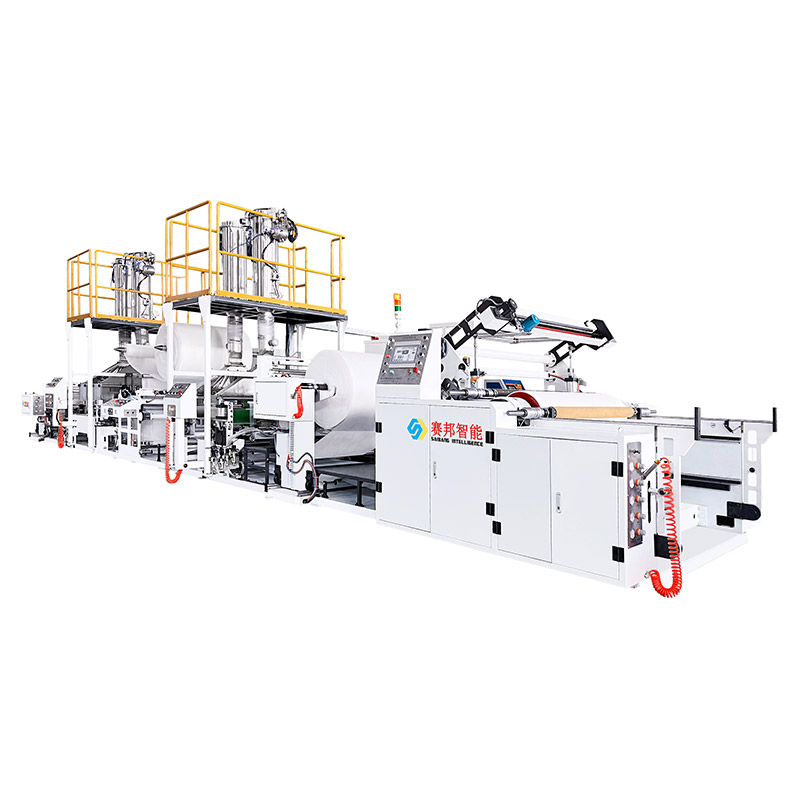
1. Define the real production target before comparing machines
Most buyer comparisons fail because the target is too vague. “Higher speed” and “better quality” are not procurement criteria. You need a measurable target that connects product specs to line capability.
Start with the product definition:
Core structure type and geometry, including whether the core size range must expand in the future
Raw material behavior, including elastic nonwovens, biodegradable lamination materials, or multi-layer combinations that require tighter process windows
Required process functions, including online inspection, weighing, or thickness monitoring
Then translate that into production outcomes:
Stable output that matches your daily capacity goals
Consistent forming dimensions across size changes
Predictable scrap rate under normal operator conditions
A supplier should be able to turn these inputs into a technical feasibility view quickly, rather than asking you to “choose a model first.” SAIBANG’s customization workflow begins with a structured requirement breakdown and feasibility evaluation, turning customer inputs into an actionable analysis rather than generic recommendations.
2. Use a structured evaluation table to avoid hidden gaps
Below is a practical evaluation structure that procurement, production, and engineering teams can use together. It prevents the common issue where a machine “fits” on paper but fails during commissioning.
| Evaluation area | Why it matters in absorbent material production | What to verify with the supplier | How SAIBANG supports customization |
|---|---|---|---|
| Requirement capture | Prevents wrong structure and wrong control design | Can the supplier produce a requirement report and define constraints clearly | Dedicated requirement investigation and analysis report for targeted solution design |
| Parameter scalability | Avoids repurchasing when width, speed, or size range changes | Width range, speed range, forming size adjustment range | Parameter customization such as width expansion, speed upgrades, and forming size range extension |
| Process function modules | Reduces quality drift and manual checks | EPC web guiding, online thickness detection, weighing, closed-loop feedback | Function customization including EPC, online thickness detection, and quantitative weighing |
| Automation level | Determines labor intensity and stable output | Auto feeding, line linkage, data collection | Automation upgrades from manual feeding to automatic feeding and line linkage |
| Integration capability | Prevents “islands” in your workshop | MES interface, dust removal, waste recovery | Interfaces for MES, dust collection, and waste recycling integration |
| Compliance readiness | Reduces retrofit costs and approval risk | Cleanroom design, anti-static, explosion-proof, noise control | Cleanroom sealing and dust-free design, explosion-proof options, noise reduction to ≤70 dB |
| Delivery reliability | Protects your launch schedule | Lead time definition, milestone plan, change control | Standard customization lead time 50–70 working days, complex projects 80–120 working days, with formal change mechanism |
| After-sales execution | Keeps uptime high after start-up | Response SLA, remote support, upgrade capability | 15-minute first response, 5-minute emergency response, and ongoing upgrade support |
This table is also useful during supplier audits. A mature manufacturer should respond with documentation, not only verbal claims.
3. Evaluate customization depth, not only “customizable” labels
Many suppliers say they support customization, but their definition is often limited to external dimensions or cosmetic changes. In absorbent material equipment, real customization means adapting three layers simultaneously: mechanical structure, process parameters, and control intelligence.
A strong customization partner should cover:
Core component customization for key performance stability, such as knife groups, rollers, forming tools, and wear parts
Process window optimization for tension, temperature, pressure, and thickness uniformity that directly affects product consistency
Intelligent system integration such as PLC control, HMI operation, online detection, closed-loop feedback, and MES modules
SAIBANG positions its capability as a full-chain customization service that runs from requirement insight to solution landing, and from R&D to after-sales assurance. This matters because absorbent material production is sensitive to raw material variance, and the machine must be tuned to your reality, not an assumed “standard” material set.
4. Confirm how the supplier handles material variability and process stability
Absorbent material lines are highly sensitive to raw material behavior. Elastic nonwovens can introduce edge waves, biodegradable lamination materials can change thermal response, and multi-layer combinations can shift tension balance. If the equipment is not designed around your raw material conditions, you will see unstable bonding, uneven thickness, or frequent operator corrections.
A credible evaluation should ask for:
Control strategy for tension and temperature stability when material behavior changes
Whether the supplier can add online inspection modules to reduce quality drift over long runs
The approach to reducing manual dependency through automation and line linkage
SAIBANG’s customization framework includes process adaptation for special materials through tension and temperature control optimization, plus optional detection modules that shift quality control from operator judgement to measurable feedback.
5. Check line layout, footprint constraints, and modular upgrade paths
Many projects fail after purchase because the machine cannot be installed efficiently in the available workshop layout. Equipment length, height, maintenance access, and material flow direction can create hidden costs such as rebuilding platforms, rerouting utilities, or accepting unsafe operator spacing.
Your evaluation should cover:
Space-driven structure changes, including shortened frames or adjusted heights
Modular design that allows disassembly and relocation if your plant changes
Upgrade options that avoid replacing the entire system when you add functions later
SAIBANG supports non-standard structural customization, including special frame designs that fit the customer’s existing line layout, and detachable modular structures for integration and future changes. It also emphasizes that customization should retain core part universality so spare parts sourcing and maintenance stay cost-effective over time.
6. Validate project delivery control: lead time, milestones, and change mechanisms
For customized equipment, the main risk is not only manufacturing time. The real risk is uncontrolled scope changes, unclear acceptance standards, and missing milestone deliverables that delay commissioning.
A reliable supplier should provide:
A clear lead time definition based on customization level
Standard customization projects with parameter adjustments or a single module addition are typically planned at 50–70 working days, while complex projects can be 80–120 working days, with the exact duration confirmed by joint reviewA formal change request mechanism that prevents schedule chaos
SAIBANG uses a documented change request and impact assessment process, including schedule and cost adjustments before work continuesA design cycle expectation for early-stage control
Standard design output can be targeted in 7–15 working days, with more complex designs planned at 15–30 working days
This level of schedule definition protects your product launch planning and reduces the risk of “open-ended” delivery.
7. Prioritize after-sales execution, uptime protection, and long-term optimization
Absorbent material equipment is an operational asset, not a one-time installation. Buyers should evaluate after-sales capability using measurable response commitments and a process that remains active after commissioning.
Practical criteria include:
First response timing and emergency response timing
SAIBANG defines a first response within 15 minutes for standard feedback and 5 minutes for urgent production-stopping issuesOn-site problem solving readiness
During installation, if a site mismatch occurs, SAIBANG notes the ability to produce a non-standard support modification plan and complete processing adaptation within 24 hoursContinuous performance support
Beyond repair, SAIBANG describes ongoing process optimization and speed upgrade support when customers need higher capacityTraceable service records and proactive follow-ups
Maintenance and parts replacement records are stored for traceability, with follow-up schedules at 1 month, 3 months, 6 months, and 1 year
This is the difference between “support exists” and “uptime is protected.”
8. Why SAIBANG is a strong fit for customized absorbent material equipment projects
When buyers select customized absorbent material equipment, the best decision is usually the supplier that can control outcomes across the full lifecycle: design, manufacturing, integration, commissioning, and long-term optimization.
SAIBANG’s strengths are built around three practical outcomes:
Customization that is engineered, not improvised
SAIBANG’s full-chain customization approach connects requirement investigation, core component customization, process parameter optimization, and intelligent system integration into a single delivery path.Customization that stays serviceable long term
The customization approach emphasizes retaining core part universality so future maintenance and spare parts do not become a hidden cost burden.Customization that aligns with your workshop reality
From MES and auxiliary system interfaces to cleanroom sealing, anti-static and explosion-proof options, and noise reduction configurations, SAIBANG supports compliance and integration so the equipment fits your plant conditions rather than forcing you into expensive retrofits.
If you want to review configurations, customization ranges, and solution scope for absorbent hygiene production, you can visit our diaper making machine page and share your material set, target capacity, and workshop constraints. SAIBANG can translate those inputs into a structured proposal with defined scope, timeline, and acceptance criteria.