

How Customization Helps Absorbent Material Equipment Match Real Production Needs
In the absorbent materials industry, production conditions vary significantly between manufacturers. Differences in raw materials, product structures, output targets, and factory layouts mean that absorbent material equipment must be designed to match real production needs rather than generic assumptions. For manufacturers producing hygiene products, medical materials, and related applications, customization has become a key factor in achieving stable, efficient, and scalable production.
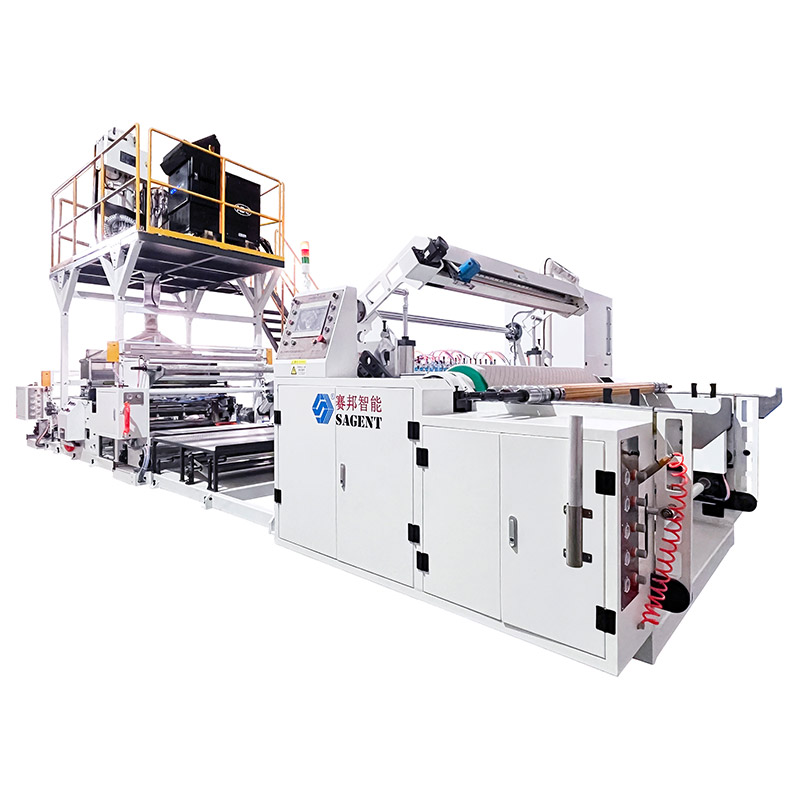
As an absorbent material equipment manufacturer focused on customized production solutions, we have found that standardized equipment often performs well in theory but encounters limitations once installed on actual production lines. Customization bridges the gap between design parameters and real-world operating conditions, ensuring that equipment performance aligns with practical manufacturing requirements.
Why Standard Absorbent Material Equipment Often Falls Short
Most standard absorbent material production equipment is developed based on average material properties and generalized process conditions. While this approach simplifies equipment design, it rarely reflects the complexity of real production environments.
Variations in nonwoven fabric structure, absorbent core composition, SAP distribution, and bonding processes can significantly influence equipment behavior. When equipment is not customized for these variables, manufacturers may experience unstable material flow, inconsistent forming quality, and increased scrap rates. These issues are typically not caused by operator error, but by a mismatch between equipment design and actual production needs.
Customization allows absorbent material equipment to be configured according to specific material characteristics and process requirements, reducing reliance on manual adjustments and improving overall production stability.
Customization Starts with Real Production Requirement Analysis
Effective customization of absorbent material equipment begins with a detailed evaluation of real production requirements. This evaluation includes raw material properties, target product specifications, expected output capacity, and process stability expectations.
By analyzing these factors at the engineering stage, potential challenges related to material handling, forming accuracy, and process synchronization can be identified early. Instead of relying on fixed configurations, customized equipment integrates adjustable parameters that align with actual operating conditions.
This requirement-driven approach helps ensure that equipment performance remains consistent not only during factory testing, but also during long-term production.
Process-Level Customization for Absorbent Material Compatibility
Absorbent material manufacturing involves multiple interacting processes, including nonwoven feeding, absorbent core forming, bonding, and downstream handling. Each process introduces variables that can affect overall equipment performance.
Customized absorbent material equipment supports these interactions through process-level design adjustments. These may include flexible forming sections, adjustable tension control systems, and material-specific feeding mechanisms. Such configurations allow production lines to accommodate different materials and product formats without sacrificing efficiency.
By embedding process flexibility into equipment design, manufacturers can maintain stable production even when materials or specifications change.
Supporting Capacity Planning and Future Expansion
Production requirements are rarely static. As market demand evolves, manufacturers may need to increase output, introduce new product types, or modify existing processes. Customization plays an important role in ensuring that absorbent material production equipment can support these changes.
Equipment designed with modular structures and scalable configurations allows capacity to be expanded incrementally. Customized provisions for future upgrades, such as adaptable control systems or reserved installation space, help extend equipment usability and improve long-term return on investment.
This forward-looking approach aligns equipment design with both current and future production planning.
Customized Control Systems Improve Production Stability
Control systems are central to maintaining consistent performance in absorbent material manufacturing equipment. Standard control architectures may not fully address variations in material behavior or process conditions.
Customized control systems allow parameters to be adjusted based on real production data, improving responsiveness to process fluctuations. Enhanced control stability reduces defect rates, minimizes downtime, and decreases operator dependency. Over time, this contributes to more predictable output and improved production efficiency.
Reducing Operational Risk Through Customized Equipment Design
One of the key advantages of customization is operational risk reduction. Equipment that closely matches production requirements is less likely to experience unexpected disruptions, excessive material waste, or performance instability.
Customized absorbent material equipment also supports clearer communication between equipment suppliers and manufacturers. When technical requirements are clearly defined and addressed during the design phase, expectations remain aligned throughout manufacturing, testing, and delivery. This reduces project risk and supports smoother production integration.
Customization as a Core Capability in Absorbent Material Equipment Manufacturing
In absorbent material production, equipment represents a long-term production asset rather than a short-term purchase. Customization should be viewed as a core capability that supports production stability, efficiency, and adaptability.
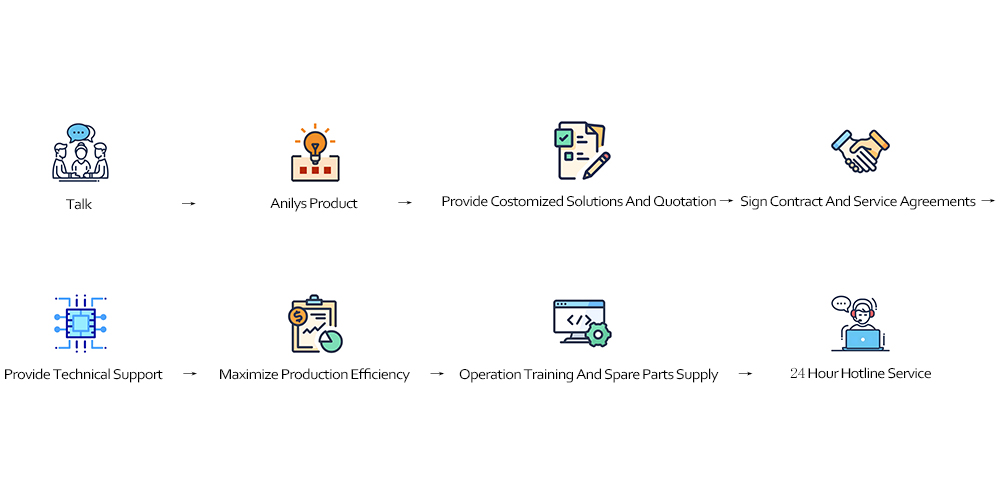
For manufacturers seeking reliable and scalable production solutions, customized absorbent material equipment provides clear advantages over standardized systems. By focusing on real production needs, customization ensures that equipment delivers consistent performance throughout its operational lifecycle. If you require customized equipment, please feel free to browse our products and contact us for more information.