


How To Operate A Spooling Machine?
Operating a spooling machine correctly is the difference between tight, uniform rolls and frequent defects like telescoping, wrinkles, loose density, and edge damage. Because spooling is the final stage before storage, slitting, laminating, or converting, any instability here quickly becomes downstream waste. The safest and most efficient approach is to follow a consistent routine: pre-start inspection, correct web threading, parameter setup, controlled ramp-up, in-process monitoring, and disciplined changeover.
If you are running web materials such as nonwovens, films, absorbent layers, or similar substrates, SAIBANG offers an industrial-grade automatic spooling machine built for stable tension control, reliable roll formation, and practical operation in continuous production.
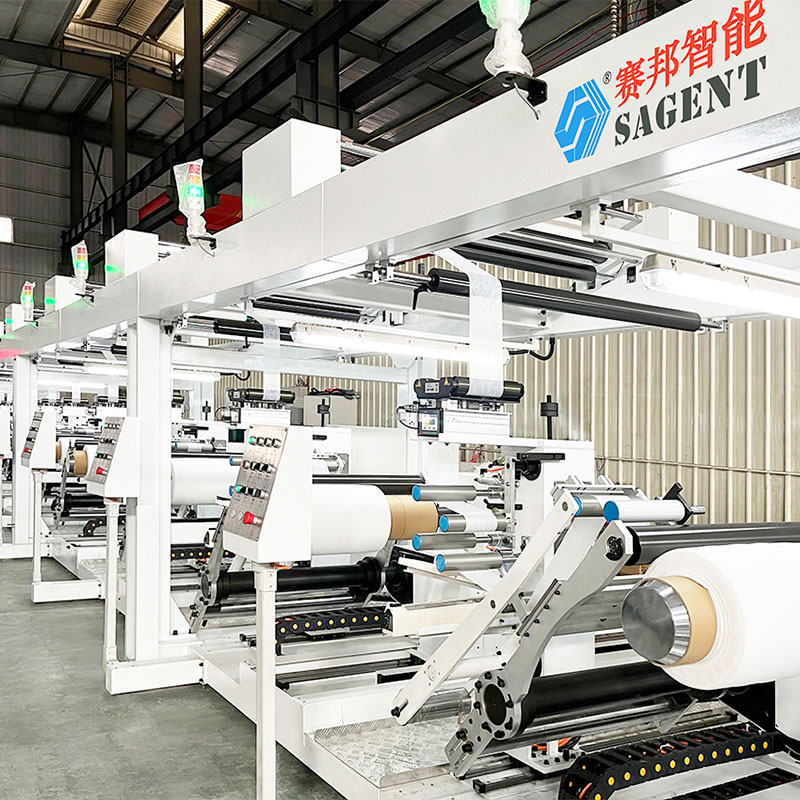
Understand what the operator controls
A spooling machine forms a roll by guiding a moving web onto a core while managing tension, alignment, and winding pressure. Most quality outcomes are decided by a few operator-controlled factors:
Web tension and how it changes as diameter builds
Line speed and acceleration profile
Edge alignment and guiding stability
Core clamping and shaft or spindle positioning
Winding hardness and pressure strategy
Cut and transfer behavior during roll changeover
When these are set correctly, the machine produces consistent rolls that unwind smoothly and stay stable during storage and transport.
Pre-start checks that prevent most downtime
Before powering into production, treat the first five minutes as quality insurance. Many roll defects originate from basic setup issues rather than material problems.
Safety and guarding confirmation
Ensure protective guards, covers, and emergency stops are functional. Verify the working area is clear, especially near rotating shafts, spindles, and nip points.Mechanical condition and cleanliness
Check for loose fasteners, abnormal play in rotating parts, and debris on rollers. Dust and fiber buildup can cause tracking issues and surface marks on sensitive materials.Pneumatic and electrical readiness
Confirm air pressure is stable if your machine uses pneumatic clamping or cutting actions. Check that the control panel shows normal status without alarms.Core and accessory readiness
Confirm core type, length, and inner diameter match the job order. Prepare enough cores to avoid stopping the line during production.
Web threading: correct path first, speed second
Threading is the foundation of stable winding. A small misroute can create tension spikes, edge wandering, and wrinkles that no parameter adjustment can fully fix.
A reliable threading sequence:
Place the parent roll in the unwinding position and lock it securely
Feed the web through the designed roller path in the correct order
Keep the web centered and flat as it enters guiding zones
Confirm the web is not twisted and edges are not rubbing against frames
Attach the lead edge to the core using your standard method, keeping the web straight across the core face
If your material is light or prone to flutter, use controlled low-speed jog mode until the web is fully stable on the core.
Parameter setup: set the job like a production recipe
A spooling machine runs best when the operator treats settings as repeatable recipes. That reduces variation between shifts and prevents excessive scrap during startup.
Core settings
Core inner diameter and length
Core clamping force or spindle lock level
Core position relative to edge alignment references
Roll specification settings
Target roll diameter or target roll length
Roll hardness target or pressure mode
Cut mode and changeover logic if the machine supports it
Tension and speed strategy
Start tension level for initial winding
Tension curve or taper strategy as diameter increases
Line speed setpoint and acceleration ramp
Deceleration behavior near target diameter
A practical parameter checklist by material behavior
| Material Behavior | Tension Setup Focus | Speed Setup Focus | Winding Hardness Focus |
|---|---|---|---|
| Stretch-prone web | Lower start tension, smooth taper | Gentle acceleration and steady speed | Avoid over-compression to prevent neck-in |
| Slippery film surface | Stable tension with strong feedback | Avoid sudden speed changes | Increase stability to prevent telescoping |
| Soft nonwoven surface | Moderate tension, prevent flutter | Controlled ramp-up | Avoid nip marks and edge crushing |
| High-bulk absorbent layers | Higher control near diameter build | Stable speed to keep layers flat | Balanced hardness to prevent core collapse |
Start-up procedure that reduces waste
A controlled start protects the roll structure and helps the machine settle into stable tracking.
Jog at low speed to confirm the web tracks correctly
Watch the edges across the first few wraps. If the web wanders early, fix alignment before increasing speed.Ramp to a moderate speed and stabilize tension
Confirm the tension reading is stable and the roll builds evenly. Early instability usually becomes worse later.Increase to production speed gradually
Avoid aggressive acceleration. Fast ramp-ups often create the first wrinkle that later turns into a permanent defect line.Verify roll edge build and hardness during the first diameter stage
If the roll edges are soft, drifting, or uneven, correct tension or guiding early rather than waiting until the roll is large.
In-process monitoring: what to watch while running
A skilled operator does not stare at the display. The operator watches the roll, the edge behavior, and the sound of the machine.
Key running checks:
Roll edges stay straight and do not telescope outward
Web stays centered and does not drift repeatedly to one side
Tension remains stable without sudden spikes during speed changes
Roll surface stays smooth without ripples or trapped air lines
No abnormal vibration, noise, or roller bounce appears as diameter increases
If a defect begins, reduce speed slightly, stabilize tension, and inspect the web path before attempting larger adjustments.
Roll changeover: keep the process consistent
Changeover is a common source of defects because the web experiences speed changes, cutting actions, and new core engagement. The goal is to keep changeover consistent and repeatable.
A reliable changeover approach:
Slow down as you approach target diameter if required by your process
Prepare the next core in advance and confirm it is aligned correctly
Execute the cut and transfer using the machine’s designed sequence
Confirm the new roll starts flat with clean edge alignment
Return to production speed gradually while monitoring the first wraps
A good changeover produces a stable start on the new core, without slack, wrinkles, or offset edges.
Common roll defects, likely causes, and operator fixes
| Defect | What You Usually See | Common Cause | Operator-Level Fix |
|---|---|---|---|
| Telescoping | Roll edges shift outward | Low stability, poor alignment, slippery web | Improve guiding, adjust tension curve, reduce sudden speed changes |
| Wrinkles | Lines or waves across roll | Mis-threading, uneven tension, roller contamination | Re-thread correctly, clean rollers, smooth ramp-up profile |
| Loose roll | Roll feels soft, collapses in handling | Low tension or too aggressive taper | Increase start tension, refine taper strategy |
| Edge damage | Frayed or crushed edges | Excess pressure, misalignment, edge rubbing | Reduce pressure, re-center web path, check edge contact points |
| Air entrapment | Bubbles or soft bands | Speed too high early, surface mismatch | Moderate speed, stabilize tension, ensure web lays flat on core |
Shutdown and basic daily care
A disciplined shutdown protects the machine and improves the next startup.
Reduce speed to zero using controlled deceleration
Cut and secure the web end cleanly
Remove finished rolls using safe handling procedures
Clean rollers and remove dust or fiber accumulation
Record the final parameter set and any issues observed for the next shift
This routine prevents repeated defects caused by leftover debris, inconsistent threading, or undocumented parameter changes.
Why SAIBANG supports efficient operation in real factories
Operational stability is not only about the operator. It is also about how the machine is designed to maintain consistent tension, repeatable winding behavior, and reliable mechanical alignment across long production hours. SAIBANG’s Automatic Spooling Machine is positioned for web-based production environments where buyers value:
Stable tension control for consistent roll formation
Practical control logic suitable for repeated product changeovers
Durable structure for continuous operation and reduced vibration risk
A configuration approach that can match different materials and roll specs
Conclusion
To operate a spooling machine successfully, focus on correct threading, disciplined parameter setup, controlled ramp-up, and continuous monitoring of roll edge behavior and tension stability. Most defects can be prevented by fixing alignment and tension early, keeping changeovers consistent, and maintaining a clean web path. If your production needs dependable winding performance and consistent roll quality across different web materials, SAIBANG provides an industrial-grade Automatic Spooling Machine designed to support stable, efficient spooling in real manufacturing conditions.