


Why Choose An SAP Core Sheet Making Machine?
In modern diaper manufacturing, the core is no longer a simple pulp pad. Brands and retailers demand thinner products, higher absorption, faster acquisition, and more consistent performance across sizes. That is why more factories are shifting toward SAP core sheet technology, where absorbent material is engineered into a controlled structure instead of being loosely formed and then adjusted by trial.
Choosing an SAP core sheet making machine is not only a decision about output speed. It is a decision about product consistency, raw material efficiency, hygiene control, and how easily your line can scale into multiple SKUs. This article explains why SAP core sheet equipment is becoming a preferred choice and how SAIBANG supports diaper production projects with stable, scalable machine solutions.
Explore SAIBANG solutions here:
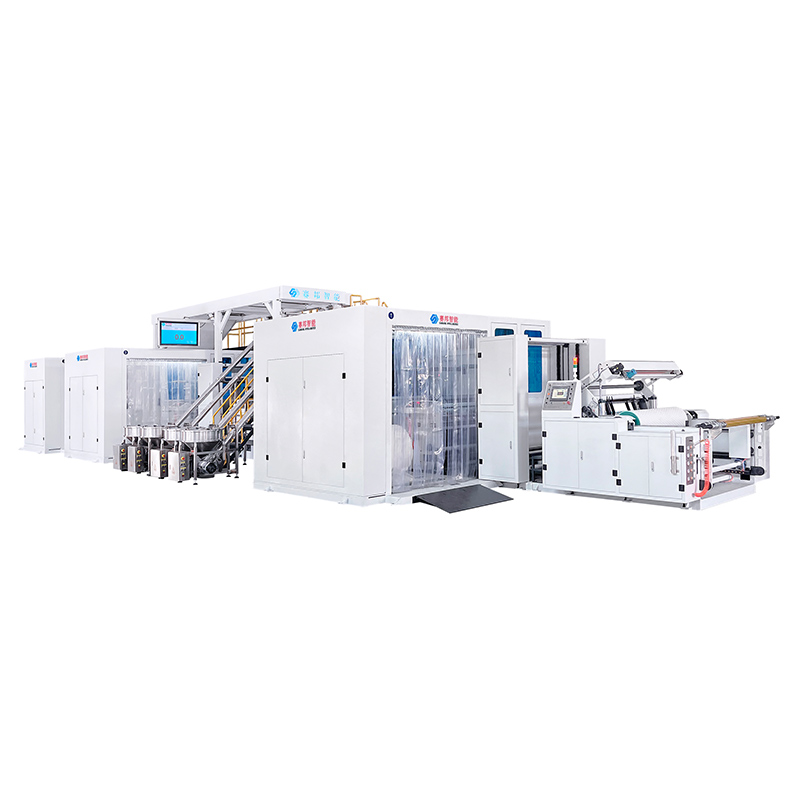
1) SAP Core Sheet Technology Fits the Direction of the Diaper Market
The market is pushing products to be thinner while holding or increasing absorbency. Traditional bulky cores are harder to market, ship, and wear comfortably. SAP core sheet technology helps manufacturers meet these expectations by allowing absorbent content to be placed more precisely.
Factories choose SAP core sheet systems because they support:
thinner core designs with controlled thickness
consistent absorption performance piece to piece
more modern product positioning for premium lines
better control when developing day and night absorbency tiers
When the core structure is controlled, it is easier for brands to specify performance outcomes and for factories to produce them repeatedly.
2) Better Absorbency Performance Through Controlled SAP Distribution
Absorbency is not just total SAP weight. It is how SAP is distributed and stabilized so liquid is acquired quickly and held without gel blocking or migration.
An SAP core sheet making machine can improve performance by enabling:
zoned SAP placement, concentrating capacity where it is needed
consistent distribution across the width, reducing weak edge zones
reduced SAP clumping, which improves intake uniformity
stable core structure that maintains shape under pressure
For production managers, the practical benefit is fewer complaints about leakage or uneven wetness. For R and D teams, it becomes easier to tune the product to target use scenarios.
3) Material Efficiency and Lower Waste in Large-Scale Production
Raw materials are a major cost driver in diapers. When forming is unstable, factories often add extra SAP or increase basis weight to protect quality. That improves pass rate but increases cost and makes the product thicker than the market wants.
SAP core sheet equipment supports cost efficiency because it improves repeatability. With stable structure and controlled dosing, you can reduce over-application and minimize scrap created by unstable forming conditions.
Common waste reductions come from:
less start-up scrap due to faster stabilization
fewer rejects from core shifting or inconsistent basis weight
lower rework caused by SAP leakage and dust issues
tighter process control so dosing is not increased as a safety margin
Over time, these improvements impact both unit cost and delivery consistency.
4) Higher Consistency Across SKUs and Faster Changeovers
Factories rarely produce one diaper size only. Most operations must support multiple sizes and multiple absorbency tiers, including overnight versions.
An SAP core sheet making machine supports multi-SKU production because it is easier to adjust a defined sheet process than to re-balance a loose formed core.
In practical terms, this can mean:
recipe-based parameter changes for different sizes
repeatable settings for SAP loading by zone
more stable output after changeover
easier training because fewer adjustments rely on operator experience
For high-volume operations, faster and more predictable changeovers reduce downtime and increase usable output per day.
5) Improved Core Integrity and Better Handling During Converting
Even if a core absorbs well, it must survive high-speed converting without breaking, shedding, or shifting. Loose structures are more likely to create dust, migrate SAP, or deform at edges, which affects diaper appearance and stability.
SAP core sheet structures can improve integrity by:
stabilizing SAP within a defined sheet
reducing movement during transfer and cutting
improving edge quality for cleaner converting
supporting thinner designs without losing shape stability
When core integrity improves, downstream processes become easier to stabilize, and quality consistency improves across long runs.
6) Cleaner Production and Better Dust Control
Dust is not only a housekeeping issue. It affects machine stability, adhesive performance, product cleanliness, and maintenance schedules. SAP and pulp dust can also increase downtime and contribute to quality variations.
SAP core sheet technology can reduce dust-related issues by:
improving material containment within the core structure
reducing SAP scatter during handling and transfer
supporting cleaner running conditions at speed
lowering maintenance frequency caused by material buildup
A cleaner process improves machine uptime and supports better quality control for customers who audit hygiene and manufacturing standards.
7) What to Look for When Selecting an SAP Core Sheet Making Machine
Choosing the right machine requires matching your target products and factory conditions. The best equipment is the one that can repeatedly hit your core weight, thickness, and placement targets with stable running performance.
Key evaluation points:
control accuracy for SAP dosing and distribution
stability of sheet formation and edge quality
compatibility with your diaper size range and target pitch
ability to store and recall recipes for different SKUs
maintenance accessibility and cleaning time
line integration capability with downstream diaper converting
8) Why SAIBANG Is Chosen for Diaper Production Projects
When factories invest in absorbent core technology, they need equipment that can support both current products and future line extensions. SAIBANG focuses on providing Diaper Making Machine solutions that align with scalable production needs, including stability, repeatability, and project support.
SAIBANG supports:
solution selection based on target sizes and absorbency tiers
configuration planning for stable forming and efficient changeovers
integration guidance for production lines and output planning
ongoing support orientation for long-term manufacturing programs
You can review SAIBANG diaper production solutions here:
Conclusion
Choosing an SAP core sheet making machine is a strategic move for manufacturers aiming to produce thinner, higher-performing diapers with consistent quality and better cost control. The key advantages come from controlled SAP distribution, improved core integrity, reduced waste, cleaner production, and easier multi-SKU management.
If your production plan includes expanding sizes, improving absorbency performance, and lowering long-term unit cost, an SAP core sheet solution is a practical foundation. SAIBANG provides diaper making machine solutions designed to support stable, scalable diaper manufacturing: SAIBANG diaper making machine.