


Can A Diaper Core Production Machine Be Customized for Different Sizes?
Diaper manufacturers operate in highly competitive markets where product variety, absorption performance, and fit quality directly influence brand recognition. As consumer demands diversify across baby diapers, adult incontinence products, and customized hygiene solutions, the ability to produce cores in multiple sizes becomes essential. This raises a practical question for production managers: can a diaper core production machine be customized to support different core sizes efficiently?
Modern equipment, including SAIBANG’s advanced diaper core production machine, is designed to meet these changing needs with flexibility, modular engineering, and precision control technology.
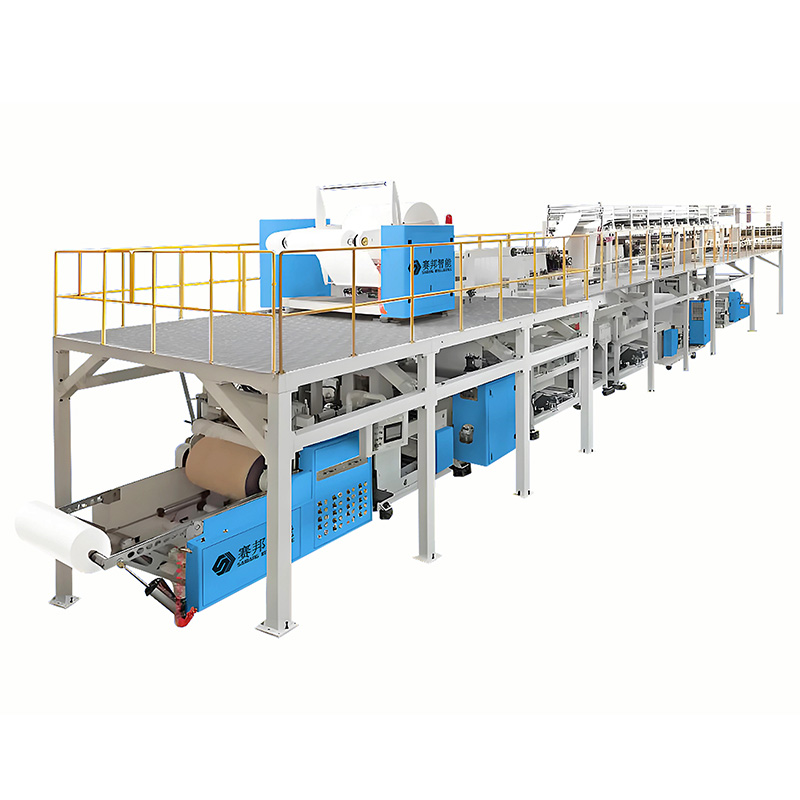
Why Size Customization Matters in Diaper Core Manufacturing
Different diaper categories require unique core lengths, widths, SAP distribution patterns, and fluff density levels. Even within the same category—such as newborn, medium, or XL—consumers expect specific shapes tailored to body proportions.
Manufacturers who lack size flexibility face several challenges:
limited product range and weaker market competitiveness
higher costs when operating separate machines for each size
difficulty responding to quick product adjustments from retailers
wasted materials due to inconsistent core shaping
A machine capable of size customization allows producers to scale quickly, reduce downtime, and match shifting market demand without significant equipment replacement.
How Modern Diaper Core Machines Support Size Variability
Current-generation equipment integrates modular components and servo-driven adjustment systems that enable quick changes in width, length, and absorption structure. These features are especially crucial when running high-speed production lines where even slight deviations may affect diaper integrity.
Key structural features enabling customization include:
adjustable forming box dimensions
modular SAP applicator configurations
servo-controlled cutting length adjustments
interchangeable shaping plates
tension-controlled unwinding systems
These engineered systems allow the machine to adapt core geometry without compromising forming stability or production speed.
Table: Core Size Elements That Can Be Customized
| Core Feature | Customization Type | Impact on Product |
|---|---|---|
| Length | Servo-controlled cutting | Determines diaper coverage |
| Width | Forming box / shaping plate adjustment | Influences fit and leak protection |
| SAP Placement | Pattern and quantity control | Affects absorption and retention |
| Fluff Density | Airlaid forming tuning | Contributes to softness and flexibility |
| Edge Shape | Mold or plate change | Optimizes comfort for different age groups |
SAIBANG equipment is designed to manage each of these parameters with high repeatability, ensuring stable core performance across size variations.
Understanding the Customization Mechanisms
Customization works through coordinated adjustments across several production modules.
1. Forming System Adaptation
The forming box, which shapes the fluff and SAP mixture, is engineered for width variation. By changing its internal plates or positioning, manufacturers can switch between narrow infant sizes or wider adult cores rapidly.
2. SAP Metering and Distribution
Patterns can be modified through programmable SAP applicators. Whether the design requires concentrated absorbent zones or evenly distributed particles, the system recalibrates without mechanical overhaul.
3. Cutting System Programming
Length customization is handled by servo-driven cutting units capable of millimeter-level precision. This ensures alignment with downstream packaging and diaper folding processes.
4. Layer Bonding and Shaping
Hot-melt application, tissue wrapping, and compression steps can be tuned to accommodate different core thicknesses, ensuring uniform bonding even at higher speeds.
These different mechanisms work together to deliver seamless, consistent customization in continuous production cycles.
Maintaining High Precision During Size Adjustments
Size variability introduces the risk of deformation, inconsistent edges, or SAP migration. Precision control technology plays a key role in overcoming these issues.
Critical factors include:
real-time tension control to prevent fabric stretching
servo synchronization for cutting and conveyor matching
airflow stabilization in the forming box to avoid uneven fluff distribution
thermal balance in hot melt systems to ensure uniform adhesion
SAIBANG’s engineering focuses on stability during adjustments, minimizing the downtime typically associated with resizing operations.
Advantages of Using a Customizable Core Production Machine
Manufacturers that adopt adjustable core machines gain several strategic benefits, particularly when expanding into new product categories.
1. Reduced Equipment Investment
Instead of purchasing multiple fixed-size machines, one flexible system can support a full product portfolio.
2. Faster Product Development
When retailers request new sizes or custom core shapes, manufacturers can adapt immediately, accelerating market entry.
3. Lower Material Waste
Precise calibration results in fewer rejected products during size transition phases.
4. Enhanced Production Efficiency
Servo-driven systems maintain speed and consistency regardless of size settings, ensuring continuous high-volume output.
5. Ability to Serve Niche Markets
Specialty products—overnight diapers, ultra-thin cores, or high-absorption adult diapers—can be produced on the same line through pattern and dimension adjustments.
For this reason, many global hygiene suppliers prioritize machines offering strong customization capabilities.
Customization Options Available in SAIBANG Diaper Core Machines
SAIBANG’s production solutions emphasize flexibility, automation, and accuracy. The company’s diaper core production machine supports a wide range of customization features:
variable forming box widths for size transition
programmable SAP feeding ratios and distribution layouts
servo-controlled cutting modules for adjustable lengths
replaceable shaping and compression components
adaptable tissue wrapping patterns
tension-stable unwinding suitable for various raw materials
OEM and ODM options further allow manufacturers to request unique configurations tailored to their product strategies.
The Role of Automation in Reliable Size Customization
Automation ensures that adjustments are not dependent on manual calibration, reducing operator-induced errors.
SAIBANG integrates:
digital control interfaces for quick resizing
memory storage for size presets
automatic material alignment systems
production monitoring for continuous quality verification
These automated features support rapid changeovers while maintaining consistent bonding, weight distribution, and product dimensions.
Environmental and Material Considerations
Different diaper sizes require varied airflow, fluff openness, and SAP retention levels. Environmental factors such as humidity may influence forming stability during size changes.
Maintaining controlled conditions helps ensure:
consistent fluff fluidity in the forming box
predictable SAP settling behavior
stable tissue wrapping tension
uniform bonding strength at machine speed
Manufacturers adopting SAIBANG machines benefit from designs that minimize environmental sensitivity and enhance overall process robustness.
Summary
A modern diaper core production machine can indeed be customized for different sizes, and customization has become a fundamental requirement for competitive diaper manufacturing. Through modular design, servo-driven precision, and automated adjustment systems, SAIBANG delivers machines capable of handling diverse product specifications with high accuracy.
For producers seeking flexibility, reduced downtime, and reliable core formation, SAIBANG’s diaper core production machine provides a scalable solution aligned with current market demands. It supports varied diaper categories, enhances operational efficiency, and ensures consistent quality across size variations.