


How Do You Improve Precision on An Embossing Machine?
Embossing Machines play a central role in the production of nonwoven fabrics, hygiene materials, packaging sheets, medical textiles, and industrial laminates. As market demands increasingly emphasize uniformity and fine pattern definition, manufacturers focus on improving embossing precision—an essential factor that influences texture clarity, bonding stability, and end-product quality. Achieving high precision requires optimizing machine mechanics, roller design, operational parameters, and production environment.
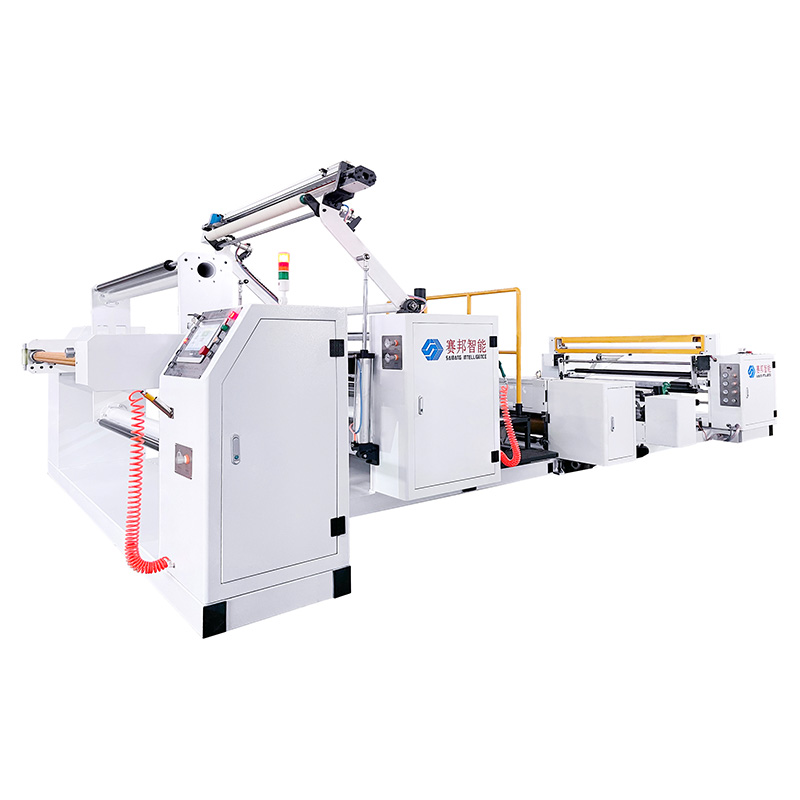
SAIBANG’s embossing machine series is engineered to meet these needs by delivering stable performance, consistent pressure balance, and adaptable pattern control for various types of nonwoven and composite materials. Understanding how precision is achieved helps manufacturers refine their processes and maintain reliable production output.
Why Precision Matters in Embossing
Precision directly impacts the visual and functional properties of embossed materials. In applications such as medical fabrics, baby care products, or high-grade packaging, even slight deviations in pressure or roller alignment can cause pattern distortion, inconsistent bonding, or changes in fabric thickness.
High precision ensures:
uniform embossing depth
stable bonding distribution
reduced defect rate across long production runs
improved mechanical properties such as tensile strength
predictable material behavior in downstream processes
Without adequate precision, manufacturers risk increasing waste, lowering yield, and compromising customer expectations. This makes precision optimization an ongoing priority for production managers.
Mechanical Factors Affecting Embossing Precision
The mechanical structure of an embossing machine determines how accurately pressure is transmitted across the roller width and how well the material remains aligned during high-speed operation.
One of the most important aspects is roller balance. Even slight variations in roller roundness or weight distribution can create inconsistent contact points. SAIBANG embossing equipment maintains roller precision through controlled machining and strict quality checks.
Additional mechanical factors include:
parallelism between embossing rollers
stiffness of machine frame
consistency of pressure loading system
dynamic stability at high running speeds
If any of these elements suffer from instability, the embossed pattern may vary across the material width or worsen as production speed increases.
Process Parameters That Influence Precision
A key contributor to precision is the relationship between pressure, temperature, and line speed. Every material type—whether hot-air nonwoven, spunbond, or laminated structure—responds differently when subjected to embossing force.
Pressure
Incorrect pressure distribution leads to uneven bonding or incomplete texture formation. Precision machines maintain pressure through balanced hydraulic or mechanical systems, ensuring both sides of the roller engage evenly.
Temperature
Heat softens fibers and allows them to form defined patterns. If temperature fluctuates, certain areas may emboss deeper while others remain shallow. Temperature stability is essential, especially when running lightweight medical fabrics.
Line Speed
The faster the machine runs, the greater the challenge to maintain accurate roller engagement. Excessive speed can cause pattern stretching or incomplete fiber bonding.
Optimizing these parameters requires continuous monitoring and calibration. SAIBANG machines are designed to hold stable performance even at typical production speeds of 60–100 m/min, depending on the pattern and material density.
Table: Key Parameters and Their Influence on Precision
| Parameter | Impact on Precision | Potential Issues if Misadjusted |
|---|---|---|
| Roller Pressure | Controls embossing depth and bonding | Irregular patterns, weak bonding |
| Temperature | Softens fibers for uniform imprinting | Burn marks, shallow patterns |
| Line Speed | Influences roller-material contact time | Stretched or distorted patterns |
| Material Tension | Maintains fabric alignment | Wrinkles, skewed embossing |
| Roller Alignment | Ensures contact uniformity | Side-to-side inconsistency |
This table highlights how each variable contributes to accurate embossing and why fine-tuning is essential for high-quality output.
The Role of Pattern Rollers in Precision
Embossing rollers are the heart of an embossing machine. The pattern roller determines how texture is transferred to the material. Precision machining ensures uniform depth, spacing, and geometry across the roller surface.
Elements that influence roller precision include:
engraving accuracy of pattern
roller surface hardness treatment
runout tolerance and roundness
thermal stability of roller core
balance under rotational stress
SAIBANG provides pattern roller customization for customers requiring specialized textures, enabling stable replication of intricate patterns at industrial production speeds.
Improving Precision Through Material Handling Control
Material handling is another critical factor that affects embossing uniformity. Nonwoven fabrics, especially lightweight varieties, can shift or stretch under pressure. Maintaining consistent tension helps prevent distortion.
Effective tension control ensures:
the web remains centered during operation
fibers do not elongate or compress unpredictably
edges do not curl or wave during embossing
Large-diameter unwinding and rewinding rollers, such as those used in SAIBANG machines, contribute to smoother transitions and minimal tension fluctuations. This is particularly valuable during long, continuous production cycles.
Enhancing Precision With Environmental Stabilization
Environmental conditions—often overlooked—play an influential role. Temperature fluctuations in the production room can cause thermal expansion of machine components and affect roller contact. Humidity also affects fiber moisture levels, which impacts embossing response.
Manufacturers improve precision by controlling:
room temperature within a stable range
humidity levels appropriate for the selected material
airflow patterns to prevent lightweight webs from fluttering
A stable production environment supports consistent material behavior and enhances pattern definition.
Digital Monitoring and Automation for Precision Improvement
Modern embossing systems increasingly rely on digital monitoring to track pressure, temperature, tension, and speed in real time. Automated adjustment mechanisms reduce operator error and improve repeatability.
Automation-supported functions may include:
closed-loop temperature regulation
servo-driven pressure adjustment
intelligent speed synchronization
automatic web tracking systems
These features allow the embossing process to adapt dynamically as material conditions change, resulting in a more consistent final product. SAIBANG’s engineering approach integrates stability-focused automation into the embossing machine line for customers requiring precise, high-speed output.
Maintenance Practices That Sustain Long-Term Precision
Even the most advanced machines require maintenance to preserve accuracy. Vibrations, mechanical wear, and material residues accumulate over time, gradually reducing precision.
Important maintenance steps include:
regular calibration of rollers
cleaning roller surfaces to prevent buildup
checking bearing and shaft wear
verifying pressure system accuracy
inspecting alignment of guiding components
A structured maintenance plan ensures long-term machine stability and reduces downtime caused by inconsistent embossing performance.
SAIBANG Engineering Advantages for High-Precision Embossing
To help manufacturers meet the growing demand for premium-quality nonwovens and hygiene materials, SAIBANG integrates several engineering enhancements into its embossing systems:
balanced roller structures minimizing runout
large-format unwinding diameter (up to Φ1200 mm) for tension stability
high-speed capability with stable pressure distribution
customizable embossing widths and patterns
OEM/ODM support for specialized medical, hygiene, and industrial applications
These features ensure that SAIBANG equipment maintains precision even during extended high-volume production.
Conclusion
Improving precision on an embossing machine requires careful optimization of mechanical components, process parameters, roller design, material handling, and environmental conditions. manufacturers who manage these variables effectively achieve better embossing clarity, stronger fiber bonding, and reduced defect rates.
SAIBANG’s embossing machine lineup is engineered to deliver accuracy and stability across a wide range of nonwoven materials, enabling producers to meet strict quality standards required in medical, hygiene, and technical textile applications. By combining precision-focused design with advanced control systems, SAIBANG supports customers seeking consistent, high-quality embossing results in modern manufacturing environments.