


What Is A Film Slitting Machine?
In modern packaging, electronics, and printing industries, precision in material cutting determines both production efficiency and product quality. A film Slitting Machine is specialized equipment designed to cut large rolls of plastic film or flexible materials into narrower rolls with consistent width and smooth edges. It serves as a vital link in the converting process—transforming master rolls into precisely sized rolls ready for lamination, coating, or packaging. In this article, we will explore what a Film Slitting Machine is, how it works, its key components, types, and applications. We’ll also highlight SAIBANG’s film slitting machines, known for high-speed performance, accuracy, and intelligent automation.
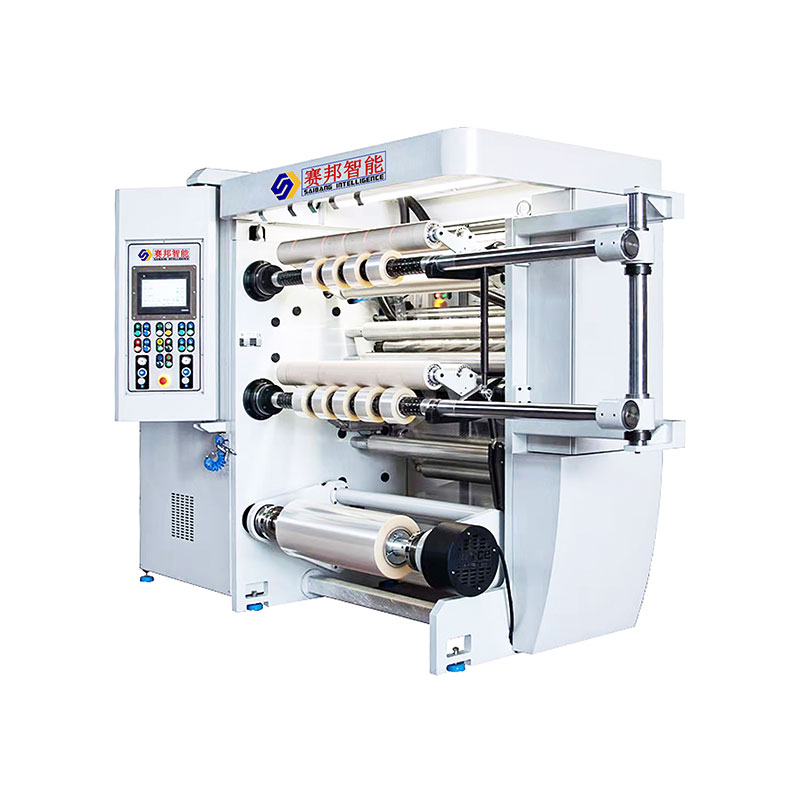
1. Definition and Core Purpose
A film slitting machine is a high-precision device used to divide wide webs of flexible film materials such as BOPP, PET, CPP, PVC, or laminated film into smaller rolls according to required specifications. Unlike simple cutting tools, a slitting machine maintains exact tension and alignment throughout the process, ensuring that each slit roll maintains uniform dimensions and smooth edges.
Film slitting machines are indispensable in industries where tight tolerances and consistent film thickness are critical. In packaging manufacturing, for example, jumbo rolls of plastic film must be converted into smaller rolls for bag-making, lamination, or food packaging lines. Without accurate slitting, downstream machinery may suffer misalignment, uneven feeding, or defective sealing.
SAIBANG film slitting machines are built to meet these industrial demands. With advanced servo control and web alignment systems, they deliver cutting accuracy within ±0.1 mm, ensuring smooth, burr-free edges even at speeds exceeding 500 meters per minute. These features make SAIBANG equipment ideal for high-volume film processing plants that prioritize both quality and speed.
2. Working Principle and Process Flow
The operation of a film slitting machine follows a sequential process involving unwinding, slitting, and rewinding. Each stage is carefully synchronized to maintain tension consistency and avoid wrinkles or film stretching.
Unwinding Stage:
The machine begins by feeding a large master roll onto the unwinding shaft. Tension sensors and brake systems maintain stable web tension as the film is pulled into the slitting zone.Slitting Stage:
The film passes through high-speed rotary blades, razor blades, or score knives that precisely cut it into narrower strips. The cutting method is chosen based on film type, thickness, and desired finish.Rewinding Stage:
The slit strips are rewound onto new cores to form compact rolls. Servo-driven winding shafts ensure even pressure and uniform roll diameter.
In SAIBANG’s advanced systems, all three stages are monitored by PLC-controlled feedback loops. Laser alignment and edge guiding sensors continuously correct the web path, minimizing deviation even at high line speeds. The result is smooth, accurate slitting without film curl, stretching, or waste.
| Process Stage | Description | Key Technology |
|---|---|---|
| Unwinding | Feeds jumbo film roll into machine | Automatic tension control system |
| Slitting | Cuts film into narrow strips | Rotary or razor blade mechanism |
| Rewinding | Winds slit film into finished rolls | Servo-controlled dual shafts |
This continuous and synchronized process ensures reliability and repeatability in every production cycle.
3. Key Components and Technical Structure
A film slitting machine’s precision and stability depend on the coordinated function of several critical components. Each part is engineered to handle high tension and delicate film materials without deformation or static buildup.
1. Unwinding Unit
This unit supports the large film roll and maintains balanced web feeding. SAIBANG models feature automatic hydraulic lifting and EPC (Edge Position Control) systems, which align the film edge to prevent lateral drift during slitting.
2. Slitting Section
The slitting section houses the cutting mechanism—typically rotary shear blades or razor blades. Rotary blades are ideal for thicker films like PET and PVC, while razor blades handle thin films such as BOPP or PE. SAIBANG’s blade holders include micrometric adjustment for precise cutting width calibration.
3. Rewinding Unit
The rewinding shafts collect slit film strips onto cores. Dual-shaft rewinding ensures balanced torque distribution, while pneumatic friction shafts provide independent tension control for each roll. This prevents telescoping and ensures compact, smooth winding.
4. Drive and Control System
Equipped with servo motors and PLC systems, modern film slitting machines achieve fine-tuned speed regulation and tension synchronization. SAIBANG’s digital HMI panel allows operators to set parameters such as cutting width, acceleration, and rewinding pressure with ease.
5. Frame and Safety Features
The robust steel frame minimizes vibration, maintaining precision at high speeds. Safety guards, emergency stop buttons, and anti-static devices protect both operators and the material.
Each component contributes to the overall stability, accuracy, and safety that define SAIBANG’s next-generation film slitting equipment.
4. Types of Film Slitting Machines
Film slitting machines are categorized by their design, automation level, and slitting technology. Understanding the differences helps manufacturers choose the right machine for their specific material and production capacity.
1. Manual and Semi-Automatic Slitters
These models require manual blade positioning and roll handling. While lower in cost, they are suited for smaller-scale operations with moderate production demands.
2. Fully Automatic Slitting Machines
Fully automated systems, like those offered by SAIBANG, integrate servo-driven controls, automatic knife positioning, and tension synchronization. Operators can set cutting parameters through a touchscreen interface, reducing setup time and maximizing output accuracy.
3. Duplex Rewinding Slitting Machines
Designed for high-volume operations, duplex models use dual rewind shafts to produce two or more rolls simultaneously. This setup enhances productivity without compromising precision.
4. Center and Surface Rewinders
Center Rewinders: Best for films requiring tight rolls with controlled tension.
Surface Rewinders: Suitable for delicate films that need gentle contact with the rewinding drum.
| Type | Automation Level | Ideal Material | Key Feature |
|---|---|---|---|
| Manual | Low | Light-duty film | Easy setup, low investment |
| Semi-Automatic | Medium | Mid-range film | Balanced precision |
| Fully Automatic | High | Industrial film rolls | Intelligent control & high speed |
| Duplex | High | Multi-roll output | Dual shaft for parallel winding |
SAIBANG’s wide product line covers each of these configurations, ensuring tailored solutions for film converters worldwide.
5. Benefits of Using a Film Slitting Machine
Investing in a film slitting machine offers significant operational and quality benefits for manufacturers handling flexible materials.
1. High Precision and Consistency
Machines equipped with servo-driven blades and tension sensors maintain dimensional accuracy throughout production. SAIBANG models achieve consistent slitting width even under continuous high-speed operation.
2. Enhanced Production Efficiency
Automation reduces setup time and manual intervention. Roll changes, blade adjustments, and material threading can all be handled seamlessly within minutes, improving daily output.
3. Reduced Material Waste
Accurate edge guiding and automatic correction systems minimize cutting errors and film scrap, maximizing usable yield and lowering costs.
4. Versatility Across Materials
A single machine can process multiple substrates—BOPP, PET, CPP, PVC, PE, and laminated composites—making it adaptable to various production lines in the packaging and printing industries.
5. Operator Safety and Convenience
Modern machines feature enclosed cutting zones, touch-free control panels, and anti-static treatment. SAIBANG ensures that safety and productivity coexist, creating a comfortable and secure working environment.
In combination, these benefits translate into lower production costs, improved output quality, and greater competitiveness for film converters.
6. Industrial Applications and Future Trends
Film slitting machines are widely used in packaging, printing, laminating, and electronic film processing. Each sector demands precise control and clean edge quality to ensure downstream efficiency.
Packaging and Printing
In food and consumer goods packaging, films such as BOPP and CPP must be slit into exact widths for heat sealing, bag making, and lamination. A small deviation can affect print registration or sealing quality.
Electronics and Optical Films
For high-performance films like PET and polyimide used in displays, solar panels, and insulation, ultra-precise slitting is required. SAIBANG’s machines with servo tension control ensure zero film deformation and edge curling.
Label and Adhesive Film Production
Label stock and self-adhesive tapes require clean, burr-free edges to maintain application accuracy. The fine-tuned blades in SAIBANG’s slitting systems achieve mirror-smooth cutting performance.
Future Development
The next generation of film slitting machines will integrate IoT-based monitoring, predictive maintenance, and AI-driven adjustment algorithms. SAIBANG is actively developing intelligent models that track machine performance in real time, optimize parameters automatically, and reduce downtime through digital diagnostics.
This technological evolution not only enhances productivity but also supports sustainable manufacturing by minimizing energy consumption and waste.
Conclusion
A film slitting machine is more than just a cutter—it’s an intelligent precision system that determines the quality and efficiency of film converting operations. From packaging to electronics, its role is fundamental in ensuring accurate dimensions, smooth edges, and reliable roll formation.
SAIBANG, a professional manufacturer of high-speed film slitting machines, provides advanced solutions equipped with servo control, automatic alignment, and durable construction. Designed for performance, precision, and ease of operation, SAIBANG machines empower manufacturers to produce flawless results in every slitting run.
As production demands grow and automation advances, film slitting machines will continue to define the standards of flexibility, efficiency, and quality in modern converting industries—and SAIBANG remains dedicated to leading that innovation.