


What Is A Paper Slitting Machine?
In the paper processing industry, precision and speed define production quality. A paper Slitting Machine is an essential piece of converting equipment that transforms large rolls of paper, film, or foil into smaller rolls of precise widths. This process, known as “slitting,” is vital across multiple industries such as packaging, printing, labeling, and stationery manufacturing. In this article, we will explore the working principle, components, classification, and advantages of Paper Slitting Machines, while highlighting SAIBANG’s paper slitting machine series, which are engineered for accuracy, efficiency, and long-term durability.
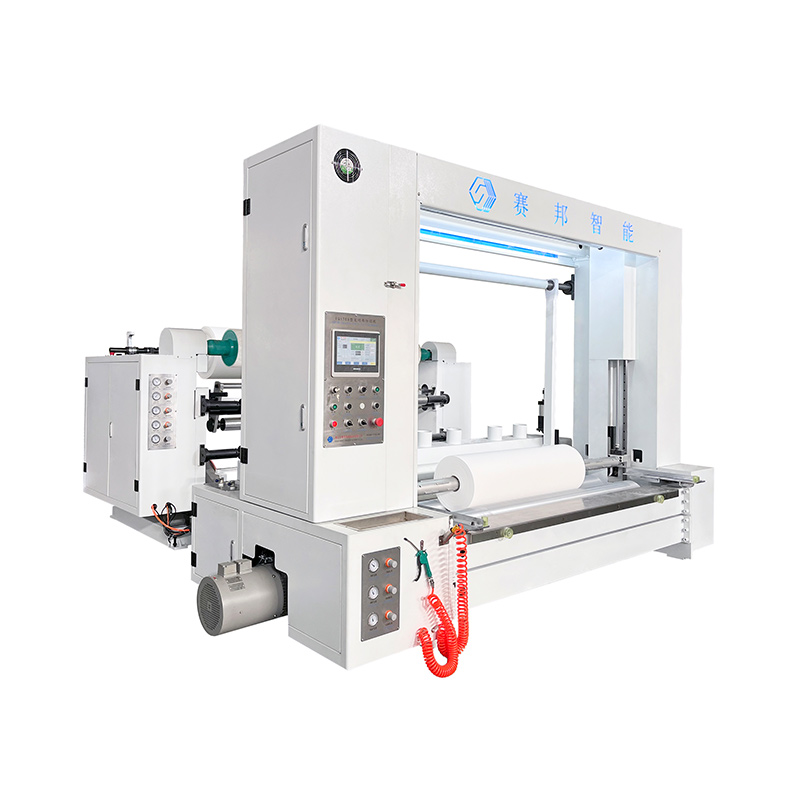
1. Overview of Paper slitting machines
A paper slitting machine is designed to cut wide web materials into narrower rolls using rotary blades or razor cutters. The machine unwinds a large “jumbo roll,” slits it into specified widths, and rewinds the finished strips onto new cores.
This system plays a crucial role in modern production lines, where customized roll sizes are needed for packaging films, adhesive labels, laminates, and more. The goal is not just cutting but maintaining consistent tension, alignment, and edge precision throughout high-speed operation.
SAIBANG paper slitting machines combine advanced mechanical structures with intelligent controls, ensuring that each cut is clean, uniform, and burr-free. The machines are widely used in paper mills, label factories, and flexible packaging industries where precision and consistency are non-negotiable.
Key performance indicators of slitting machines include:
Slitting accuracy: deviation tolerance usually within ±0.1 mm.
Speed range: from 100 to 500 meters per minute, depending on material.
Rewinding diameter: typically up to 1000 mm for industrial rolls.
These metrics demonstrate how crucial slitting equipment is for achieving productivity and minimizing material waste in downstream processes.
2. Working Principle and Process Flow
The operation of a paper slitting machine involves a coordinated system of unwinding, slitting, and rewinding mechanisms. Each stage contributes to achieving the final product’s precision and surface quality.
Unwinding: The large paper roll is loaded onto the unwinding shaft. Tension control systems maintain uniform web feeding and prevent wrinkles or stretching.
Slitting: The web passes through rotary knives or razor blades that cut it into narrower strips. Knife type and angle are chosen based on material thickness and texture.
Rewinding: After cutting, the strips are rewound onto new cores with balanced tension, forming smaller, finished rolls ready for packaging or further processing.
In modern SAIBANG slitting systems, this process is managed by PLC (Programmable Logic Controller) units and servo motors that automatically adjust speed and pressure. Real-time sensors track web alignment, ensuring stable and synchronized motion throughout the line.
| Stage | Main Function | Key Technology |
|---|---|---|
| Unwinding | Feed raw material roll | Automatic tension control |
| Slitting | Cut material into strips | Precision rotary or razor blades |
| Rewinding | Wind finished rolls | Dual-shaft torque balance system |
This integrated workflow guarantees both efficiency and cutting accuracy even during extended production cycles.
3. Main Components and Their Functions
A paper slitting machine consists of several key assemblies, each playing a specialized role in maintaining precision, stability, and safety during operation.
1. Unwinding Unit
This section holds the parent roll and allows controlled feeding. Equipped with hydraulic lifting arms, it supports heavy rolls and ensures smooth rotation. SAIBANG’s models feature automatic web alignment to correct offset deviations in real time.
2. Slitting Section
At the heart of the machine, the slitting section determines the quality of the final product. It uses rotary shear blades, score knives, or razor blades, depending on the application. The cutting shafts are precisely balanced to avoid vibration, producing sharp and clean edges.
3. Rewinding System
The rewinding section gathers the slit strips and forms compact rolls. Dual-shaft or center-surface rewinding mechanisms maintain even tension distribution, avoiding telescoping or edge damage.
4. Control Panel and Sensors
Operators can manage parameters like speed, width, and tension from a digital touchscreen interface. Modern SAIBANG systems include optical sensors, load cells, and torque monitoring to provide automated correction during operation.
5. Frame and Safety Features
The frame structure must withstand continuous motion. SAIBANG uses reinforced steel frames with anti-vibration technology, ensuring machine longevity. Safety guards, emergency stops, and interlocks comply with CE safety standards.
Each part works seamlessly to ensure precise slitting, minimal downtime, and safe operation.
4. Types of Paper Slitting Machines
Paper slitting machines vary according to design, material type, and slitting method. Choosing the right type ensures optimal performance for different production environments.
1. Manual Slitting Machines
These are basic systems with manual adjustments for blade positioning and roll changeover. They are ideal for small-scale operations or prototype production where speed is secondary to flexibility.
2. Semi-Automatic Slitting Machines
Semi-automatic models integrate partial automation such as tension control and edge guiding. They balance cost efficiency with improved productivity and are common in mid-sized paper and packaging plants.
3. Fully Automatic Slitting Machines
Fully automated systems like those from SAIBANG integrate PLC controls, servo-driven motors, automatic blade positioning, and touch-screen interfaces. These machines can operate continuously with minimal operator intervention while maintaining perfect accuracy.
4. Duplex and Rewinder Slitters
Duplex models use dual rewind shafts to manage two or more output rolls simultaneously, increasing throughput.
Below is a quick comparison:
| Type | Automation Level | Ideal For | Key Advantage |
|---|---|---|---|
| Manual | Low | Small workshops | Easy setup |
| Semi-Automatic | Medium | Medium-volume plants | Balanced efficiency |
| Fully Automatic | High | Large-scale production | High precision & speed |
| Duplex | High | Multi-roll processing | Dual output capacity |
SAIBANG offers a comprehensive range covering all categories, ensuring every customer—from start-up converters to industrial manufacturers—finds a model that fits their production needs.
5. Advantages of Using a Paper Slitting Machine
The introduction of advanced paper slitting machines has revolutionized the converting industry, offering measurable improvements in quality and productivity.
1. Precision and Consistency
Unlike manual cutting, slitting machines maintain consistent width across all rolls. SAIBANG’s servo-controlled models ensure deviations remain within 0.1 mm, critical for label and packaging applications where even minor errors can cause printing misalignment.
2. Increased Productivity
Automated slitting and rewinding minimize operator intervention, reducing downtime and increasing daily output. High-speed models can achieve over 400 m/min, enabling faster order fulfillment.
3. Reduced Material Waste
Accurate edge control prevents miscuts and wastage. The tension control system optimizes material use by maintaining stability during slitting, especially for thin paper grades.
4. Improved Safety and Reliability
Enclosed cutting zones, automatic braking, and overload protection make modern machines safer than ever. SAIBANG’s designs comply with international CE and ISO safety certifications.
5. Flexible Material Compatibility
Besides paper, these machines can handle film, foil, nonwoven fabric, and laminated materials—making them versatile across industries from food packaging to medical supplies.
The combination of these advantages means that a well-designed slitting machine is not only an operational asset but also a competitive advantage for manufacturers focused on efficiency and precision.
6. Application Fields and Future Development
Paper slitting machines are indispensable in various production lines where precision-cut rolls are required. Common applications include:
Printing and packaging: For preparing rolls of coated or kraft paper for printing presses and bag production.
Label manufacturing: Producing self-adhesive label stock and release liners with strict width tolerances.
Tissue and stationery industries: Converting large parent rolls into smaller consumer-sized products.
Film and foil converting: Slitting laminated paper or aluminum foil used in food and pharmaceutical packaging.
As automation and smart manufacturing advance, the future of slitting technology will focus on digital integration, AI-based error detection, and real-time performance monitoring. Machines like SAIBANG’s high-speed intelligent models already incorporate IoT connectivity, allowing operators to track production efficiency remotely and adjust parameters instantly.
These innovations not only boost productivity but also align with sustainability goals by reducing waste and energy consumption. With continual development, paper slitting machines will remain central to precision converting industries worldwide.
Conclusion
In essence, a paper slitting machine is a critical industrial tool that combines mechanical precision, automation, and smart control to convert jumbo rolls into customized, high-quality rolls suitable for multiple applications.
SAIBANG stands at the forefront of this technology, offering paper slitting machines designed for durability, accuracy, and intelligent operation. Each model reflects the brand’s commitment to helping manufacturers achieve superior productivity and product quality.
From tension control to automated blade positioning, every detail in a SAIBANG machine is engineered to deliver reliability and precision—empowering global converters to meet modern production demands efficiently and sustainably.
Previous: What Is A Film Slitting Machine?