


How Does A Laminating Machine Work?
A Laminating Machine works by joining two or more layers of material into one stable structure. In simple terms, it feeds the materials forward, keeps them aligned, applies bonding force, and then rewinds the finished laminated product in a controlled roll. That is the basic idea, but in real production the process is much more important than it sounds. A good laminating machine is not only there to stick layers together. It is there to keep bonding stable, reduce waste, and make sure the finished material can move smoothly into the next process.
That is why buyers usually stop asking only how the machine works and start asking how well it works in production. If bonding is uneven, the material may separate later. If the feeding tension is unstable, the surface may wrinkle. If the rewinding is poor, even a good laminate becomes harder to use downstream. In other words, the machine is part of the whole production result, not just one step in the middle.
The Basic Working Principle
A laminating machine works by bringing two or more material layers together under controlled pressure, speed, and bonding conditions. In some systems, this is done with heat and adhesive. In some systems, it is done with coating and pressing. In ultrasonic lamination, the bonding happens through high-frequency vibration that creates localized heat at the contact points. This allows the material layers to bond without heating the whole machine and without adding glue across the full surface.
That is one reason ultrasonic systems draw so much interest in nonwoven processing. They offer a cleaner way to bond certain flexible materials while keeping the line compact and efficient. For factories handling roll-fed material, this matters a great deal. A machine that can laminate continuously without relying on full-surface adhesive handling often gives a cleaner production workflow and a lower maintenance burden.
Why Material Feeding Matters So Much
Many people think lamination begins at the bonding point, but the real process starts before that. The machine has to unwind the parent rolls smoothly and keep them under steady tension. If one material feeds faster than the other, the layers shift. If the tension changes too much, the finished laminate may wrinkle or distort. This is why feeding accuracy is just as important as bonding power.
In large-scale converting, stable unwinding affects almost everything after it. Clean feeding helps maintain edge alignment, pattern consistency, and finished roll quality. A laminating machine may look simple from the outside, but much of its value comes from how well it controls the material before bonding even begins.
How Ultrasonic Lamination Changes The Process
In an ultrasonic laminating system, the machine uses ultrasonic vibration to create fast, localized bonding energy. Instead of relying on glue or traditional heated pressing across the whole surface, the machine focuses energy where the material layers need to be joined. This allows the laminate to form while keeping the process cleaner and more direct.
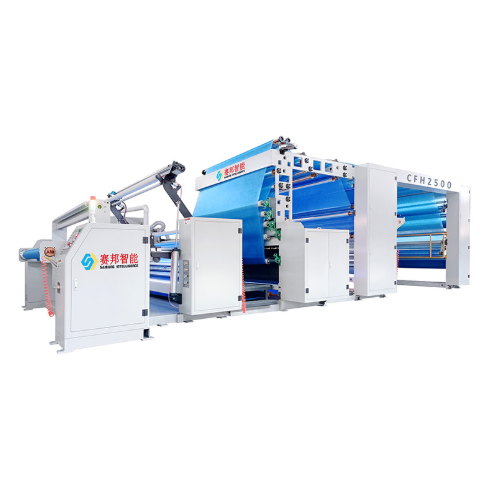
Our product fits naturally into this type of application. It is built as a 2500 mm ultrasonic laminated quilting machine for nonwoven materials, which makes it suitable for factories that need continuous lamination and embossing in roll form. That kind of machine is not only doing surface joining. It is also helping create material structure, appearance, and production consistency in one pass.
For buyers, that changes the value of the machine. It is no longer just a bonding tool. It becomes part of how the finished product performs and how efficiently the line runs every day.
Why Width And Speed Matter In Real Production
A laminating machine should match the scale of the plant, not just the idea of the product. This is where width and speed become practical factors rather than just technical numbers. A wider machine allows more industrial material formats to run without extra conversion. A faster machine helps increase output, but only if bonding and rewinding remain stable at that speed.
That is why a large laminating machine often makes more sense for factories processing wide nonwoven rolls or running continuous production schedules. It supports longer runs, reduces frequent roll changes, and fits better into higher-volume manufacturing. Buyers in hygiene materials, medical protection, packaging, and filtration usually care about this because machine width affects both flexibility and efficiency.
The machine direction here follows that logic. A wider-format ultrasonic lamination system gives more room for industrial-scale production while still maintaining bonding accuracy and material control. For larger factories, that can make daily output planning much easier.
What Happens After Bonding
Once the materials are bonded, the machine is still not finished with its job. The laminated structure needs to move forward under stable control and then be wound into a finished roll. If rewinding is uneven, the laminate may shift, telescope, or lose edge quality. That makes storage, transport, and downstream processing more difficult.
This is one of the details buyers often notice only after installation. A machine may laminate well at the bonding point, but if the winding section is not steady, the finished rolls still create trouble later. That is why experienced buyers rarely judge a laminating machine by bonding alone. They look at the whole line result, from unwinding to finished roll formation.
Where Laminating Machines Are Commonly Used
Laminating machines are widely used where flexible materials need to gain more structure, function, or appearance. In nonwoven processing, this can include hygiene materials, medical protection, filtration media, packaging layers, home textile semi-finished materials, and automotive interior structures. In these applications, lamination is not simply decorative. It often affects strength, handling, thickness control, or surface performance.
That is also why buyers usually care about process matching more than machine labels. The best machine is the one that fits the material and the factory workflow. A line running soft nonwoven structures has different needs from one running heavier composite layers. The machine category may be the same, but the working conditions are not.
What B2B Buyers Usually Care About
For importers, converters, and industrial buyers, the real concern is usually not whether the machine can run once. It is whether it can run well every day. They look at output stability, bonding quality, material compatibility, and how easily the machine can be adjusted when production changes. They also want to know whether the supplier can support configuration changes, pattern customization, and long-term service.
This is where OEM and ODM capability become useful. Many factories do not want a machine that is only standard. They want a machine that matches their material width, pattern requirement, roll diameter, or production target. A supplier that can discuss those points clearly is easier to work with because the project becomes application-driven instead of catalog-driven.
Another common pain point is the gap between a sample demonstration and real plant conditions. A machine may look capable in theory, but buyers still need confidence that it will match their actual material, actual speed target, and actual downstream process. That is why technical communication before ordering is such a large part of equipment purchasing.
Why Machine Choice Affects More Than One Step
A laminating machine is often judged as one station in production, but in reality it affects much more than that. It influences material waste, operator workload, downstream roll quality, and even customer complaints if the final laminate is not stable. A poor machine choice does not always fail immediately. Sometimes it shows up later as slower production, more adjustment, and weaker product consistency.
That is why buyers choosing a large laminating machine usually think in terms of system value. They are not only buying output width. They are buying operating stability, process fit, and the ability to keep production moving without unnecessary interruptions. In many factories, those gains are worth more than simply reaching a higher line speed on paper.
How To Judge The Right Laminating Machine
The best way to judge a laminating machine is to start with the production reality. What materials are being combined. What width is required. How strong should the bond be. Does the process need embossing as well as lamination. What happens to the finished roll after this step. These questions tell much more than a simple specification sheet.
A good supplier should be able to discuss those points in a practical way. Buyers usually need more than a machine list. They need help matching the right process to the right material and output target. That is especially true when the project involves wide materials, continuous production, or custom line requirements.
Conclusion
A laminating machine works by feeding multiple material layers in a controlled way, bonding them under the right process conditions, and rewinding the finished laminate into a stable roll. In industrial production, the real value comes from how well the machine manages the full process, not just the bonding point. Feeding stability, bonding accuracy, width control, and finished roll quality all matter together.
For factories working with wide nonwoven materials, a large laminating machine is often the better choice because it supports higher-volume production, broader material compatibility, and a more stable continuous workflow. If you are comparing laminating equipment, planning a new line, or looking for OEM and ODM support based on your material and production goals, feel free to contact us. We can help you review the application, discuss a suitable setup, and provide practical guidance for your project.
Previous: