


What Is The Best Machine for Cutting Fabric?
The best machine for cutting fabric depends on what kind of fabric you process and how you run production. For small workshops handling cut pieces one by one, the answer may be different. But for factories working with fabric rolls, especially nonwoven rolls, the better answer is usually a Slitting Machine. It gives cleaner width control, steadier output, and better production speed than manual cutting or basic cutting tools.
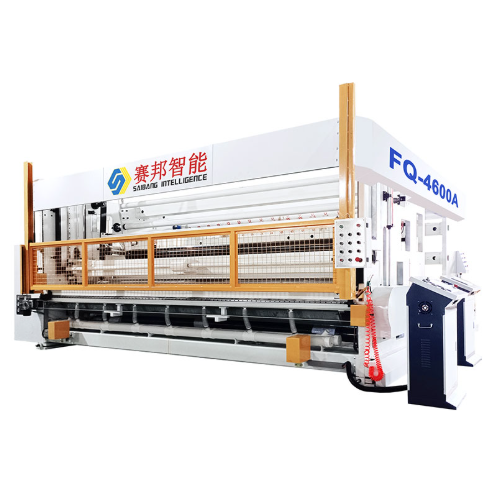
That is where our product fits naturally into the topic. A fabric slitting machine is built for wide roll materials that need to be cut into narrower rolls with consistent width and stable edges. In real production, that matters much more than many buyers expect. When the cut is not clean, the next process slows down. When the width is not stable, material waste rises. When the machine cannot keep tension steady, roll quality becomes harder to control. A good slitting setup solves these problems at the source.
Why Manual Cutting Stops Working At Scale
A lot of buyers begin by asking a simple question: what machine cuts fabric best? The real question is usually about scale. Manual cutting tools may work for samples, small jobs, or irregular shapes, but they do not match the needs of continuous roll production. Once output volume increases, buyers usually care less about basic cutting and more about speed, edge quality, rewinding, and repeatability.
That is why many converters move toward roll-to-roll equipment instead of relying on table cutting alone. A slitting machine does more than separate material. It also controls how the roll feeds, how tension is held, and how the finished rolls are wound. That combination is what makes it more suitable for industrial fabric processing.
What Makes A Slitting Machine The Better Choice
For wide fabric rolls, the best machine is usually one that can cut continuously without losing width accuracy. Our product direction follows that logic. A nonwoven fabric slitting machine is built to take a wide parent roll and turn it into narrower rolls that match later production needs. This is much more practical for hygiene materials, medical materials, wipes, packaging-related nonwovens, and other roll-fed applications than cutting piece by piece.
A proper slitting machine also helps in ways buyers notice later, not just on day one. It shortens handling time, reduces rework, improves roll consistency, and supports cleaner downstream feeding. In other words, it is not only a cutting machine. It is part of how the whole line stays efficient.
That is why a fabric roll slitting machine is usually the better answer when the material comes in rolls and the finished product also needs to stay in roll form. It fits the real workflow better than a simpler cutting method.
Why Material Type Changes The Answer
Not all fabrics behave the same way. Woven fabrics, coated fabrics, laminated materials, and nonwoven materials each create different cutting demands. Some stretch more. Some deform under tension. Some require cleaner edge control to avoid tearing or fiber pull. That is why experienced buyers do not only ask for a machine. They ask whether the machine matches the material.
Our product line is positioned around nonwoven and related roll materials. One of the listed slitter models is described for spunlaced nonwoven, spunbonded nonwoven, hot air nonwoven, hot rolled nonwoven, melt-blown nonwoven, fluffy nonwoven, puffing paper, and air-laid paper, with material widths from 2000 mm to 3200 mm and mechanical speeds reaching 1000 to 1300 m/min. That tells buyers something important: the machine is built for continuous industrial conversion, not occasional light-duty cutting.
For buyers, that matters because the wrong machine usually does not fail all at once. It creates slower output, unstable edges, more waste, and more operator adjustment. Those costs often become obvious only after installation.
What Buyers Usually Care About Most
When buyers compare fabric cutting equipment, they are rarely looking at blade action alone. They usually care about four things at the same time: whether the machine can keep width accuracy, whether the edge stays clean, whether the speed matches production goals, and whether the finished rolls rewind properly.
These points matter because cutting quality affects everything downstream. If the roll is not wound tightly, transport and storage become harder. If tension control is weak, later processing becomes less stable. If the edge finish is poor, the product may not meet customer expectations even when the width looks correct. This is why machine selection is usually tied to output quality, not only to machine speed.
Buyers also care about whether the supplier can adapt the machine to the job. That is where OEM and ODM support become useful. In equipment projects, standard configurations are not always enough. Some lines need wider widths. Some need different knife arrangements. Some need control features adjusted around the material or the plant layout. A supplier that can discuss those details clearly is much easier to work with over the long term.
Why Customization Matters In Real Production
In converting, small differences in material often create large differences in performance. One buyer may process soft hygiene nonwovens. Another may handle thicker laminated fabric structures. Another may need output matched to diaper, wipe, or medical converting lines. The machine may belong to the same product category, but the working conditions are not the same.
That is why customization matters so much in this market. The supplier should be able to look at material width, roll diameter, target output, knife setup, and downstream use before finalizing the machine. This is one of the clearest signs that the project is being handled seriously. Application-based design, process optimization, and scalable capacity planning are exactly the kind of points buyers expect when they are sourcing industrial equipment rather than a simple standard item.
For B-end buyers, this is often where the real value sits. The best machine is not always the most expensive model. It is the one configured around the material and the production target.
Where Slitting Machines Bring The Most Value
A fabric slitting machine creates the most value when the plant needs repeat output from roll materials. This is common in hygiene products, wipes, medical supplies, air-laid material processing, and related fabric converting fields. In these industries, the machine is not only cutting material into smaller widths. It is preparing the material for the next production step with more stable dimensions and better roll form.
That is why many buyers move directly toward a fabric roll slitting machine instead of trying to adapt a more general cutting approach. They want cleaner workflow, less waste, and better line coordination. In practice, those gains often matter more than the machine headline alone.
How To Judge Whether A Machine Is Right For Your Factory
The easiest way to judge the right machine is to start with the production reality. What material are you cutting. How wide is the parent roll. How narrow do the finished rolls need to be. What line speed do you want to reach. How stable must the finished roll be for the next process. These questions usually tell more than a basic machine description ever will.
A supplier should be able to respond to those points with practical guidance. If the answer is only a catalog and a price, that is usually not enough for an industrial converting project. Buyers need to know whether the machine can match the actual material and actual output plan. That is where supplier experience, pre-sales support, and after-sales service become part of the machine value. The manufacturer behind this product line presents itself as a high-tech enterprise with CE certification, 30-plus technical patents, and full-process support from pre-sales to after-sales, which is exactly the kind of support many equipment buyers look for.
Conclusion
For roll-fed fabric production, the best machine is usually not a basic cutter. It is a slitting machine built to control width, tension, speed, and rewinding in one continuous process. That is especially true for nonwoven and related industrial materials, where clean edges and stable finished rolls directly affect later production.
A fabric roll slitting machine is often the right choice for factories that want better efficiency, cleaner cuts, and more reliable output from wide fabric rolls. If you are comparing machines, planning a new converting line, or looking for OEM or ODM support around your material and production goals, feel free to contact us. We can help review your application, discuss suitable configurations, and support your project with practical guidance before you move forward.
Previous: