


What Is An Embossing Machine?
An Embossing Machine is a machine used to create raised or recessed patterns on the surface of a material. In simple terms, it changes a plain surface into one with texture, shape, or functional pattern. This process is widely used in paper, film, foil, leather, and fabric production because embossing does more than improve appearance. It can also change how a material feels, performs, and behaves in later use.
In fabric processing, embossing is especially valuable because it can add visual depth, improve softness perception, support breathability design, and make a product feel more finished. That is why a fabric embossing machine is not only a decorative machine. It is a production tool that helps manufacturers create more distinctive and more functional materials for different end uses.
Why Embossing Matters In Modern Production
Many materials start out flat and uniform. That may be enough for some applications, but in many industries, a plain surface does not create enough value. Buyers want materials that look better, feel better, and perform better. Embossing helps do that in one step.
In real production, this matters more than people expect. A textured surface can improve product appearance, create a softer touch, and make the material feel more premium even before the customer uses it. In some sectors, embossing also helps improve airflow, flexibility, or surface friction. That is one reason embossing equipment is common in hygiene products, medical materials, household goods, and nonwoven converting.
For B-end buyers, embossing is not only about pattern. It is about product positioning. A better surface finish often makes the final product easier to sell and easier to differentiate.
What A Fabric Embossing Machine Actually Does
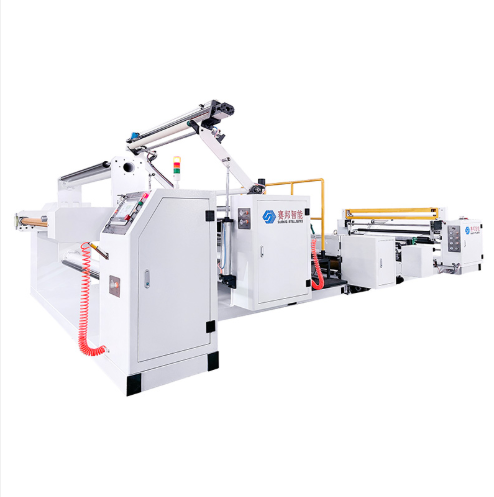
A fabric embossing machine usually works by feeding material through rollers that apply pressure and pattern at the same time. The material moves in a controlled path, the embossing rollers press the selected design into the surface, and the finished roll is collected for the next step.
That sounds straightforward, but the real value is in the control. Good embossing depends on stable material feeding, accurate roller patterning, even pressure, and smooth rewinding. If those parts do not work together well, the pattern may look uneven, the texture may be unclear, or the final roll may not run smoothly in downstream production.
That is why buyers often care about more than embossing width or line speed. They also care about consistency, pattern clarity, machine stability, and how the equipment performs during long production runs.
Why Nonwoven Fabric Embossing Has Become More Important
Nonwoven materials are now used in far more products than before. They are common in hygiene items, medical supplies, disposable household goods, agricultural applications, and some home textile categories. Because these materials are lightweight and versatile, they often need surface treatment to improve their final feel and function.
Embossing helps solve that. It can make nonwoven materials look more refined, feel softer, and perform better in applications where breathability or comfort matters. In some production lines, embossing is also combined with perforation, which gives the material extra functionality without adding too many process steps.
That is why our machine is built around nonwoven processing needs. It is designed for manufacturers who want more than simple roll handling. They need a machine that can process nonwoven materials with stable embossing performance and support a more finished output.
Why Pattern Accuracy Matters More Than Buyers First Think
Many people see embossing as a visual process first, but in production, pattern accuracy affects more than appearance. If the pattern is not clear or consistent, the finished product can look lower in quality even when the base material is good. In some applications, uneven embossing can also affect downstream performance.
This is especially important in markets where the final product must feel soft, breathable, or uniform from batch to batch. Buyers in hygiene and medical material production often pay close attention to this point because consistency matters in their finished goods. A machine that produces cleaner, more repeatable embossing gives them better control over product quality and fewer issues later in the line.
Why Machine Stability Is A Real Buying Factor
Embossing equipment may look impressive during a short test run, but serious buyers usually think beyond that. They want to know how the machine behaves during real factory use. Can it run for long shifts. Can it keep pattern quality stable. Can it handle regular production pressure without constant adjustment.
That is where machine stability becomes one of the most important parts of the purchase decision. A machine that looks capable but creates frequent interruptions will cost more in the long run. A machine that runs smoothly with stable control is easier to integrate into daily production and easier to rely on when orders increase.
For factory managers and project buyers, this is a practical issue, not just a technical one. Downtime affects output. Unstable embossing affects quality. Both affect profitability.
Why Material Compatibility Matters
Not all embossing machines are equally flexible. Some are built for one narrow material type. Others are better suited to factories that work with more than one kind of roll material. This matters because many buyers do not want equipment that limits future business.
A more adaptable machine gives the factory more room to respond to changing orders and new product plans. That is one reason compatibility matters in real equipment sourcing. Buyers often prefer a machine that can support their current production while still leaving space for expansion.
Our machine is built for nonwoven material processing, especially for hot air nonwoven and spunbond nonwoven applications. That makes it more relevant for manufacturers who need embossing equipment that fits actual production use rather than a one-purpose demonstration setup.
Why Speed Alone Is Not The Best Measure
Machine speed is always attractive in a quotation, but speed alone does not tell the full story. In embossing, quality has to stay stable while the line runs. If speed causes pattern distortion, tension problems, or uneven rewinding, the production result becomes less useful.
That is why experienced buyers do not judge embossing equipment by top speed only. They look at working speed, stability, and whether the machine can maintain acceptable output quality in normal factory conditions. In real manufacturing, that balance matters much more than a single headline number.
A machine that runs at a practical speed with reliable results is usually more valuable than one that looks faster on paper but creates more correction work later.
Why OEM And ODM Matter In Equipment Supply
For many overseas buyers, choosing the right machine is only part of the process. They also need the machine to match their production habits, width requirements, material type, and market plan. That is why OEM and ODM support matter in machinery sourcing.
In this industry, customization is not just about branding. It is about making the machine fit real factory conditions. Some buyers may need different working widths. Some may need a different control setup. Others may want the machine adjusted to match existing line layouts. A supplier that can support those needs is much more useful than one that only offers a fixed standard configuration.
For importers, converters, and factory investment buyers, that flexibility reduces risk and makes the final equipment choice more practical.
Why This Type Of Machine Has Strong Commercial Value
A fabric embossing machine has strong value because it helps manufacturers add visible and functional improvement to the product without completely changing the raw material. That makes embossing one of the more efficient ways to upgrade product appeal and production value at the same time.
For B-end buyers, this matters because the machine supports product differentiation. It gives them a way to make nonwoven materials more competitive in appearance, comfort, and usability. In crowded markets, that can be a meaningful advantage.
It also means the equipment is easier to justify as part of a long-term production plan. It is not only a machine for making patterns. It is a machine for improving finished goods and creating stronger market positioning.
Conclusion
So, what is an embossing machine? It is a machine that adds controlled texture and pattern to a material surface, helping manufacturers improve both appearance and function in one production step. In nonwoven processing, that role becomes even more useful because the right embossing result can change how the finished material looks, feels, and performs.
A well-designed fabric embossing machine gives buyers more than surface decoration. It supports better product consistency, more practical production control, and stronger flexibility for growing manufacturing needs. If you are looking for a supplier for wholesale machinery projects, OEM or ODM cooperation, or a machine that fits your nonwoven production more closely, feel free to contact us. Share your material type, width needs, and production goals, and we can help you work out a more suitable equipment solution.
Previous: